US Surges Fighter Squadrons, Bomber Sorties Over Iran as Air Campaign Enters Week Two
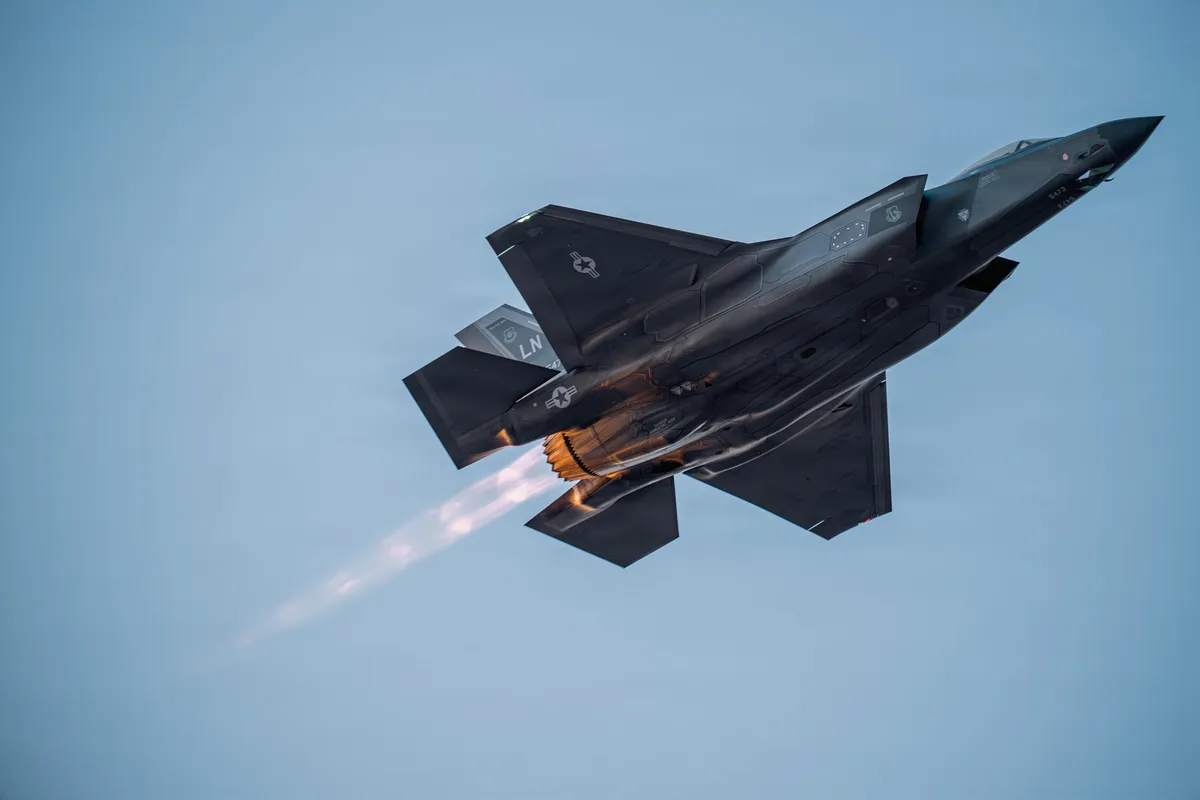
Sustained air campaign operations consume munitions faster than peacetime production rates, forcing DoD to either accelerate Raytheon/Lockheed production lines or draw down stockpiles earmarked for Taiwan contingency planning. If the campaign extends beyond 90 days, munitions inventory constraints will force a choice: deplete reserves or negotiate Iranian settlement.
This creates a hidden deadline for diplomatic off-ramps that military planners are unlikely to broadcast.
This confirms the air campaign is transitioning from initial strikes to sustained operations, not a limited punitive phase.
Surge deployments telegraph intent to maintain pressure for weeks, not days — consistent with Trump's stated objective of eliminating Iranian military capacity and leadership. For defense primes: sustained high-sortie operations drive immediate demand for munitions (Raytheon AGM-88, Tomahawk), spare parts, and logistics support; this extends beyond FY26 supplemental appropriations into baseline sustainment contracts.
For program managers: attrition rates on fighters and bombers will surface in Q2 maintenance forecasts and could accelerate depot-level repairs, creating bottlenecks if other theaters (Pacific Command, Europe) are already competing for similar capacity.
The article does not specify which fighter squadrons are being deployed, their origin bases, or the timeline for arrival in theater.
Fault Lines
Strategic intelligence, synthesized daily — with a public track record. Every call graded against what actually happened.