Philippine Navy Fields First LRAD System Aboard New OPV, Signals Non-Lethal Doctrine Adoption
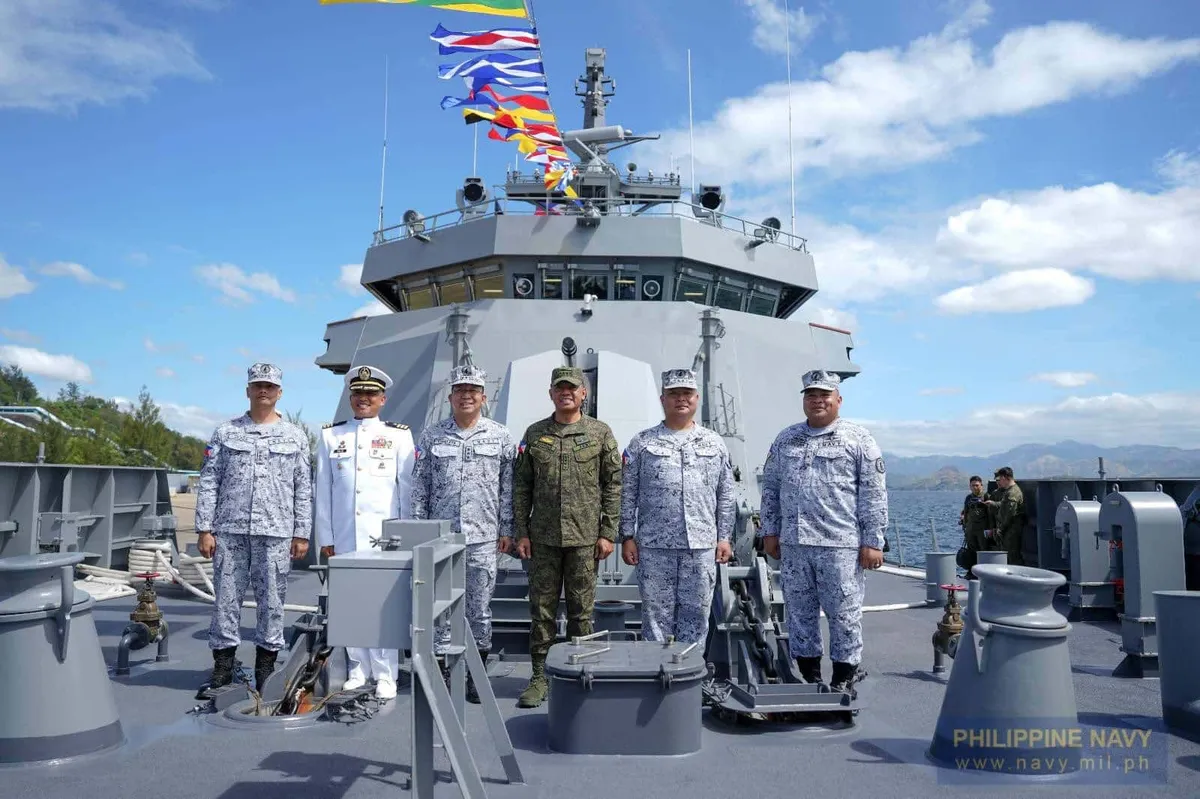
If the Philippine Navy adopts LRAD as doctrine-standard equipment for constabulary operations, it reduces the threshold for escalation control in the South China Sea without triggering U.S. or allied kinetic response protocols—allowing Manila to defend disputed features more independently and potentially constraining Beijing's ability to provoke lethal encounters.
Conversely, if this remains a single-ship installation, it signals capability interest but not operational commitment, limiting market pull-through for regional navies and leaving Sitep Italia without a volume anchor for MASS variants in Southeast Asia.
This marks the first operational deployment of non-lethal effectors by the Philippine Navy, a capability relevant to its constrained Rules of Engagement in the South China Sea, particularly during gray-zone encounters with Chinese coast guard and militia vessels.
LRAD systems allow escalation control without kinetic response—critical in disputed waters where lethal force risks international escalation. The choice of Sitep Italia (an Italian OEM) signals openness to non-U.S. suppliers for emerging naval capabilities; this matters for Raytheon (LRAD's original U.S. manufacturer) and European defense primes competing for Philippine modernization contracts.
The real constraint: we don't know whether this is a one-off pilot or the start of a fleet-wide retrofit, which determines the addressable market and whether other regional navies (Vietnam, Indonesia) follow.
The article does not specify procurement quantity, unit cost, integration timeline, or Philippine Navy plans to retrofit additional vessels. No statement on whether this system will be standard-fit on future OPVs or limited to BRP Rajah Sulayman.
Fault Lines
Strategic intelligence, synthesized daily — with a public track record. Every call graded against what actually happened.