Air Force SBIR Seeks Blast-Hardened 3D Concrete Printers for Middle East Bases Damaged by Iranian Strikes
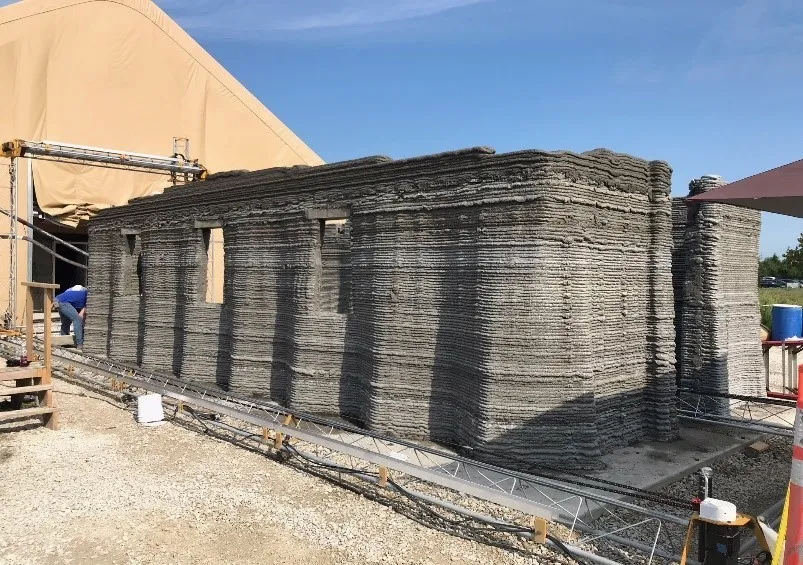
The SBIR's admission that flat-walled structures were 'never designed for the threat environment now arriving overhead' is a public confession that U.S. basing strategy in the Middle East has been operationally vulnerable for months.
Every Iranian strike since March 2026 has been a live-fire test of U.S. base resilience, and the Air Force is now treating expeditionary hardening as a core engineering problem — not a contingency.
If commercial 3D concrete printers can be field-hardened and operated by lightly trained personnel, the technology becomes a force-multiplier for CENTCOM's ability to sustain forward presence without requesting additional air-defense coverage or dispersal to new bases.
U.S.
Central Command now operates from bases designed for a threat environment that no longer exists — and the Air Force is admitting the gap publicly through a procurement action.
Hundreds of buildings across eight countries have already absorbed Iranian strikes; the SBIR's explicit focus on blast-wave geometry and fragmentation mitigation signals that temporary fixes (tents, trailers) are no longer operationally acceptable.
The January 2027 close date means Phase II awards land by mid-2027, with deployment timelines measured in months, not years — this is an emergency capability request dressed in R&D language.
If the technology matures on schedule, it reshapes base hardening from a multi-year civil-works project into a deployable engineering function, which changes both the tempo of base reconstitution after strikes and the calculus for Iranian targeting (hardened structures require heavier ordnance or saturation attacks, both of which raise the cost of the next bombardment campaign).
What is the current attrition rate on U.S. military personnel housing in the Middle East from Iranian strikes — is the damage purely structural, or are casualty figures driving the urgency of this SBIR?
Fault Lines
Strategic intelligence, synthesized daily — with a public track record. Every call graded against what actually happened.