Iran Struck Al Udeid Air Operations Center in Qatar; US Air Command Severely Damaged Early in Conflict
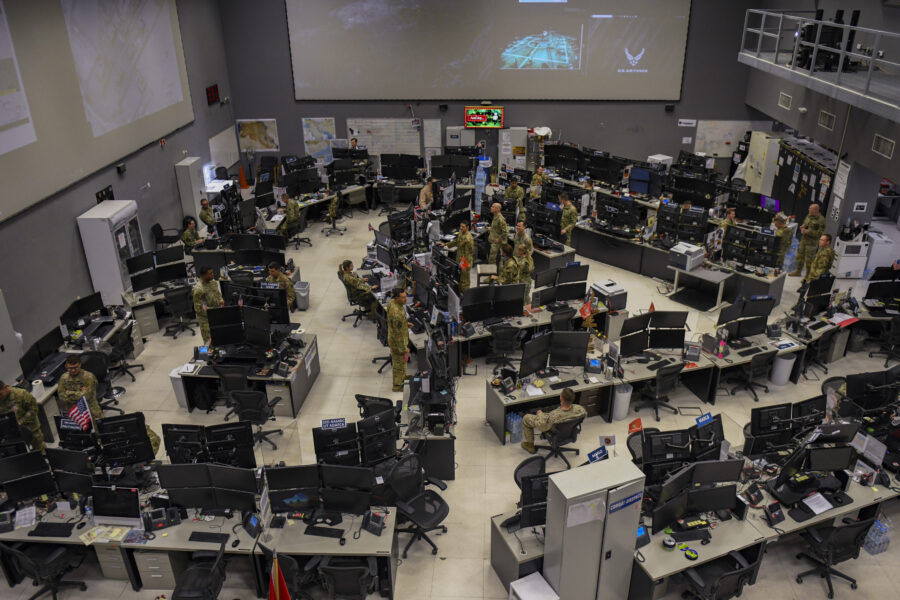
The timing matters. If Al Udeid was struck early in the conflict (as the headline suggests), the US was forced to reconstitute air command authority under degraded conditions while defending against follow-on Iranian strikes — precisely when CENTCOM was executing the initial air campaign against Iranian air defenses and naval assets.
This directly connects to the earlier signal on 1,000 Hormuz transits in two months: if the ops center was offline or partially degraded, the Navy's ability to vector ships through the strait relied on tactical air defense coordination from individual carrier strike groups rather than integrated theater air management.
That decentralization increases risk of fratricide and reduces the effective density of air cover per transit.
If the Al Udeid command center sustained the damage described, CENTCOM's ability to coordinate real-time air operations across the Middle East theater faced immediate degradation at the moment when air campaign intensity was highest.
The facility houses the command and control infrastructure for every fixed-wing sortie, tanker track, and ISR asset in the region — losing operational continuity there, even temporarily, forces the command to shift command authority to backup nodes (likely in the Gulf or via airborne command posts) at a cost of 4-6 hour latency in decision cycles.
Watch whether CENTCOM acknowledges the damage in its next force posture testimony to Congress, or whether it remains classified — the omission itself signals the severity.
What was the actual extent of damage — did the strike destroy the primary ops floor, or damage peripheral infrastructure? How long was the center non-operational, and did backup systems maintain continuity?
Fault Lines
Strategic intelligence, synthesized daily — with a public track record. Every call graded against what actually happened.