Zelenskyy Visits Azerbaijan; Defense Industry Cooperation Pact Signed Amid NATO Realignment
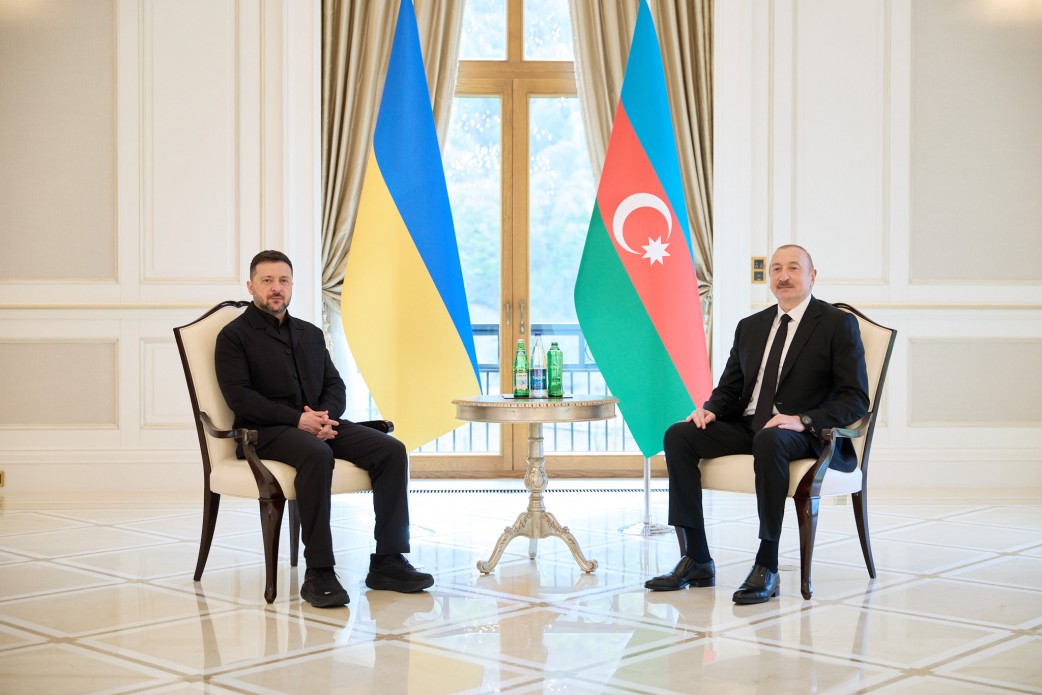
Ukraine's Azerbaijan pivot directly pressures NATO's industrial base planning. If Kyiv is securing alternative supply chains in the South Caucasus, allied defense primes lose visibility into Ukrainian demand — making it harder to forecast production requirements and justify LRIP commitments to Congress.
Simultaneously, Azerbaijan's deepening defense ties with Ukraine complicate Turkey's role as NATO's southern flank, since Ankara has historically used Baku as a lever in regional disputes. The EU's Article 42(7) activation and this Ukraine-Azerbaijan pact together suggest the alliance is splintering into regional security arrangements rather than holding as a unified bloc.
This is Ukraine pivoting away from exclusive NATO dependency at precisely the moment the alliance is fracturing.
The EU just activated its own mutual defense clause (Article 42(7)) on April 24 — signaling Brussels no longer trusts the US security umbrella — and now Kyiv is locking in a defense industrial relationship with the South Caucasus. Azerbaijan controls the land corridor to Central Asia and sits on the Turkey-Russia-Iran triangle.
If Ukraine is sourcing weapons or manufacturing capacity outside the Western supply chain, it means either NATO cannot sustain current production levels, or Zelenskyy believes he cannot rely on allied commitment holding through a protracted conflict.
The specifics of those six deals matter enormously — if any involve drone production, electronic warfare, or loitering munitions, this signals Ukraine is building redundant supply lines. Without knowing what was signed, we're reading tea leaves, but the timing is not accidental.
What are the specific defense sectors covered in the six bilateral agreements? Are any of them production partnerships (manufacturing in Azerbaijan for Ukrainian use), or pure procurement?
Fault Lines
Strategic intelligence, synthesized daily — with a public track record. Every call graded against what actually happened.