FSB Gains Authority to Shut Internet, Mobile, and Postal Services Without Judicial Review
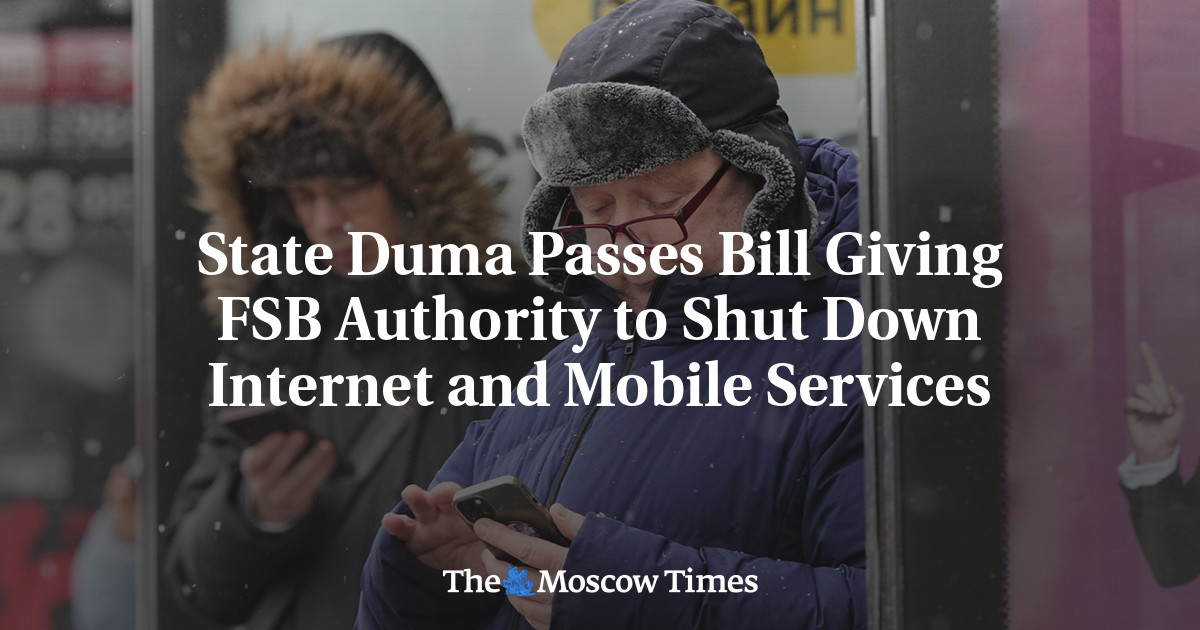
This law reduces Moscow's decision-making latency for communications denial during a domestic crisis or military mobilization, collapsing what was previously a multi-agency approval process into FSB authority.
In a Taiwan contingency or NATO escalation scenario where Russia mobilizes, this permits faster suppression of independent reporting and faster enforcement of military conscription — lowering the operational friction that historically constrained rapid Russian force generation.
This expands FSB operational authority over critical infrastructure during domestic crises or military operations, reducing response friction in scenarios where Moscow perceives internal threat.
For defense planners: Russian military exercises and contingency operations can now assume communications blackout as a baseline condition rather than a degraded state, affecting assumptions about command-and-control resilience, civilian evacuation coordination, and allied intelligence collection windows.
For Western telecom and tech firms with Russian operations or supply chain exposure, the law creates legal liability for non-compliance and operational unpredictability that may accelerate exit decisions already underway due to sanctions.
The lack of reported judicial guardrails suggests this is a domestic control tool, not a wartime measure — relevant to assessments of Russian internal stability and potential for rapid escalation without external constraint.
The article does not specify: (1) whether the FSB can act unilaterally or requires FSB Director sign-off; (2) whether there are any time limits on service shutdowns; (3) whether the law applies only during declared emergencies or permits ad-hoc use; (4) which telecom operators are affected or whethe...
Fault Lines
Strategic intelligence, synthesized daily — with a public track record. Every call graded against what actually happened.