RAF Typhoon Intercepts Iranian Drone Bound for Qatar; Escalates Gulf Air Defense Posture
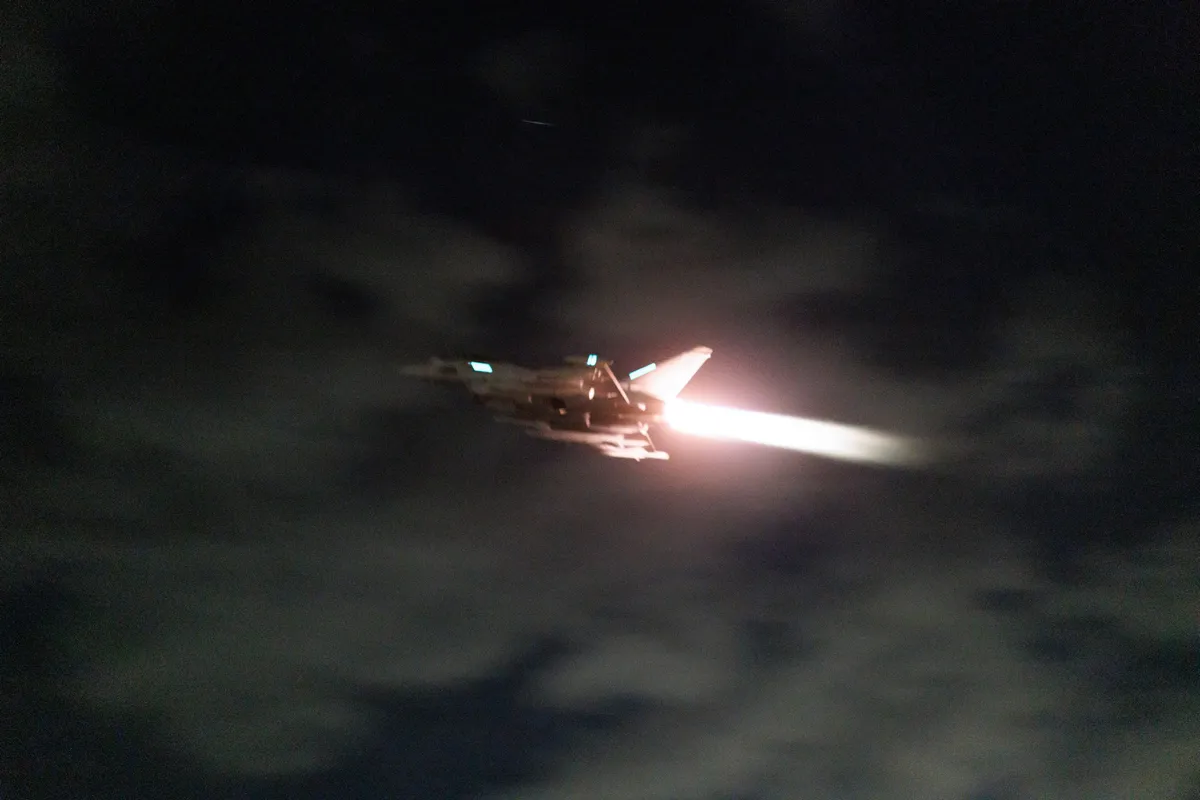
UK air defense operations in Qatar are nested within a broader US-led air superiority architecture covering the Strait of Hormuz and Persian Gulf. A sustained pattern of Iranian drone incursions would force RAF to reallocate Typhoon sorties from training and NATO commitment cycles to persistent CAP, directly competing with UK's simultaneous commitments to NATO air defense in the Baltics and Eastern Europe.
This creates a force-sizing problem: the RAF cannot maintain simultaneous high-tempo operations across the Gulf, Eastern Europe, and home air defense without procurement acceleration or political decisions to reduce commitments in one theater.
This is the first publicly reported air-to-air engagement between UK and Iranian assets in the Gulf since 2019, signaling that RAF air defense operations in Qatar have moved from deterrent posture to active interception.
The incident confirms UK willingness to use force to defend Qatari airspace—a commitment that underpins the broader US-UK-Gulf Cooperation Council air defense architecture. However, a single intercept does not indicate a sustained escalation or Iranian campaign; it may reflect routine surveillance that triggered defensive response.
The decision-relevance turns on whether this becomes a pattern: if Iranian unmanned operations toward Qatar recur, RAF sustainment budgets and forward basing agreements will face pressure to expand CAP (combat air patrol) cycles and missile inventory.
The article does not specify the drone's type, origin airfield, stated mission, or whether this was part of a coordinated Iranian operation or isolated reconnaissance.
Fault Lines
Strategic intelligence, synthesized daily — with a public track record. Every call graded against what actually happened.