Trump's Iran Pressure Campaign Fails to Trigger Capitulation; Military Buildup Alone Insufficient
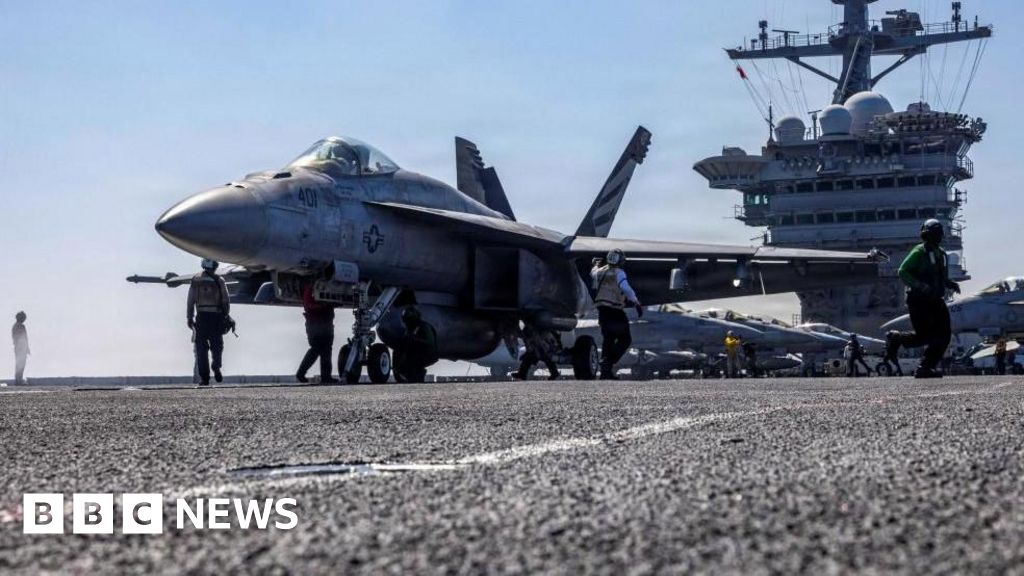
If the administration's coercion strategy fails and escalates to military strikes, sustained combat operations in the Persian Gulf will lock regional logistics and naval maintenance contracts (Huntington Ingalls, General Dynamics) into multi-year extensions, raising operating costs for Central Command.
Conversely, if the impasse breaks into negotiations, defense budgets tied to Iran contingency planning will face repriorization pressure, freeing capital for Indo-Pacific rebalance — a direct reallocation mechanism between theaters.
This signals the Trump administration expected coercive military posture alone to force Iranian concessions without accompanying diplomatic offers or credible ultimatums.
If Iran continues to resist, the administration faces a choice between escalation or negotiation — both carry operational and financial consequences. Contractors supporting Middle East force posture (naval maintenance, air operations, logistics) may see extended contracts if tensions persist; conversely, a sudden shift to talks could reverse that demand.
The gap between Trump's expectations and Iranian behavior suggests either poor intelligence assessment or Iranian resolve stronger than modeled.
The article does not specify: the nature of the military buildup (number of ships, aircraft, personnel), what Iran is being asked to concede, whether any diplomatic channel exists in parallel, or how Trump administration officials are interpreting Iran's non-response.
Fault Lines
Strategic intelligence, synthesized daily — with a public track record. Every call graded against what actually happened.