Australia Completes P-8A Poseidon Fleet at 14 Aircraft; Maritime Patrol Capability Reaches Full Strength
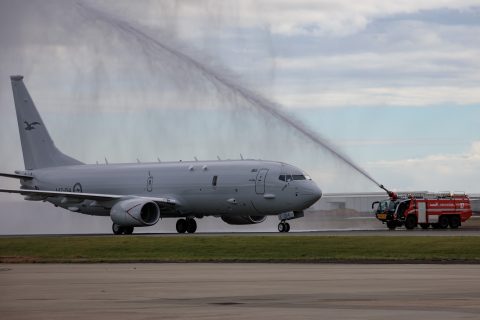
The completion of Australia's P-8A buy closes a decade-long procurement cycle but opens a different constraint: crew training and sustained operations. If RAAF maintains peacetime sortie rates (estimated 30-40 missions per year per airframe), the fleet can cover the Indo-Pacific chokepoints — Malacca, Sunda, Lombok, Makassar — on a rotational basis.
But if INDOPACOM demands surge rates (70+ sorties per airframe annually) to counter PLA Navy deployments, maintenance availability becomes the binding limit by 2028. Bombardier's simultaneous Global 6500 announcement suggests Australia is also building a secondary ISR layer for lower-threat maritime domain awareness, which may free the P-8As for higher-end anti-submarine and anti-ship targeting.
Australia now has a fully staffed maritime patrol fleet at a moment when the Liaoning carrier strike group is operating 880 kilometers southwest of Okinotori Island and Ukrainian drone strikes are demonstrating extended-range maritime targeting at scale.
The P-8A fleet is the core sensor for INDOPACOM's distributed maritime surveillance architecture in the Indo-Pacific — and Australia's completion of 14 airframes means the availability bottleneck shifts from procurement to pilot training and maintenance basing.
Watch whether RAAF announces forward-basing agreements with US or allied partners in the Philippines or Guam within the next 18 months; that will signal whether the fleet is operationally tethered to existing bases or positioned for contested-environment deployment.
Does the article specify whether these 14 aircraft represent the full-spectrum requirement, or is Australia considering additional airframes for attrition reserve or surge capacity? The source does not clarify the operational readiness status of the complete fleet.
Fault Lines
Strategic intelligence, synthesized daily — with a public track record. Every call graded against what actually happened.