France, Spain Deploy Carrier Strike Group to Eastern Mediterranean as Iran Conflict Widens
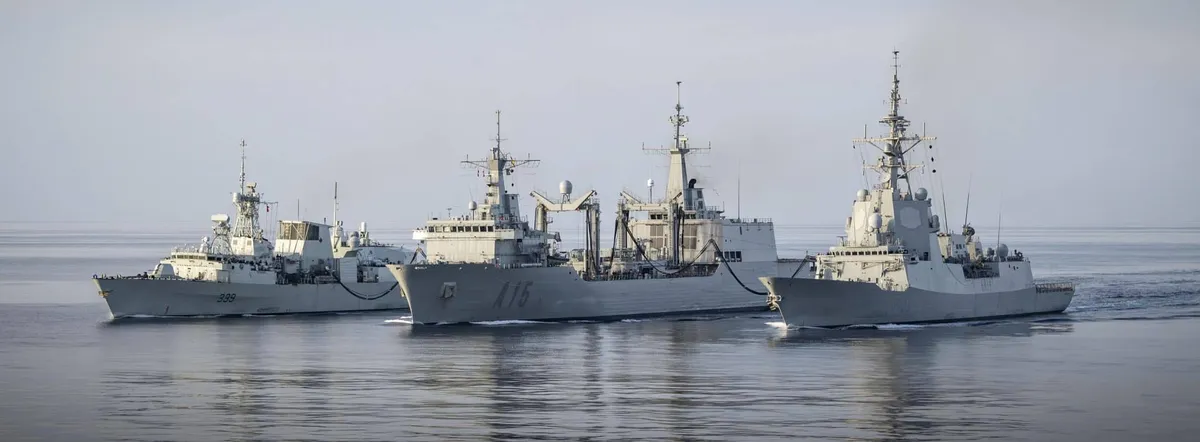
European carrier deployment transforms the conflict from a US-Israel-Iran triangle into a NATO-Iran confrontation, which raises the political cost of Iranian retaliation against French or Spanish vessels and constrains Iran's ability to threaten shipping without triggering Article 5 consultation.
This also signals to China and Russia that NATO treats the Strait of Hormuz and Eastern Mediterranean as defended alliance territory — relevant to Indo-Pacific deterrence posture if Beijing interprets allied cohesion in Middle East as predictor of Taiwan Strait response.
This is the first NATO allied force commitment to the active US-Iran conflict zone beyond air defense support or base hosting.
France and Spain are explicitly positioning a carrier strike group with integrated air defense and logistics in the Eastern Mediterranean, signaling European willingness to enforce freedom of navigation and deter Iranian naval operations in contested waters.
The move also reduces risk to US carrier operations in the region by distributing air defense responsibility — critical given the Iranian frigate sinking on March 4 demonstrated Iranian naval assets will contest regional waters. Operationally, this adds 2-3 weeks of sustained air cover and anti-ship capability that changes the calculus for Iranian surface or subsurface retaliation attempts.
The article does not specify the carrier strike group's rules of engagement, operational command structure (NATO or bilateral), or whether this deployment is time-limited or open-ended.
Fault Lines
Strategic intelligence, synthesized daily — with a public track record. Every call graded against what actually happened.