Inocea Acquires UK Wave-Class Tankers, Returning NATO Replenishment Capacity to Service
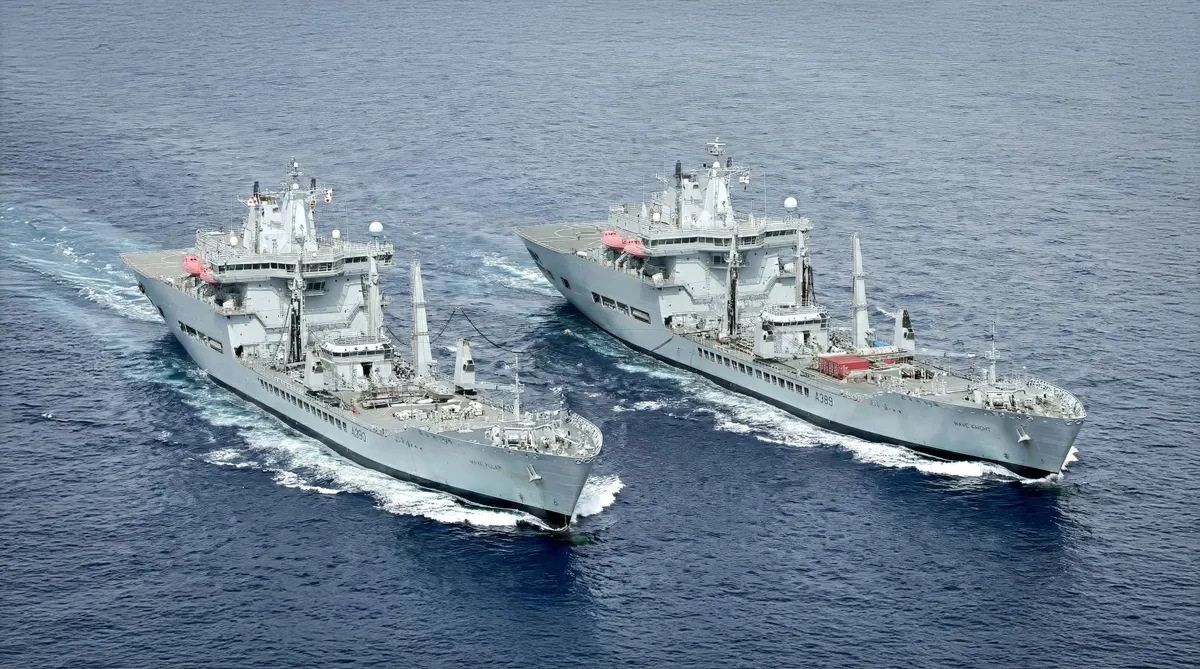
If Inocea's acquisition model establishes a template for private ownership of allied logistics vessels under NATO tasking agreements, it creates a cost-sharing mechanism that could accelerate the return of other retired NATO support ships without requiring new-build capital from individual nations' defense budgets.
This directly extends task group deployment duration in the Indo-Pacific and Eastern Europe—the two theaters where sustained presence is now a procurement priority—without increasing fleet size.
This acquisition signals a private-sector intervention into NATO logistics capacity at a moment when allied navies face sustained operational demand in the Indo-Pacific and Eastern Europe.
Wave-class tankers are force-multipliers for task group endurance; their return to service extends the operational range of British, allied, and potentially partner navies without new-build procurement timelines (typically 5-7 years for equivalent vessels).
The critical gap: Naval News does not confirm whether these vessels will operate under NATO tasking, UK flag, or a commercial contract model—this determines whether Inocea functions as a logistics contractor or a de facto allied capability provider.
If Inocea operates under NATO Framework Nation agreements or UK Ministry of Defence contracts, this creates a precedent for private-sector ownership of critical warship support platforms, with implications for surge capacity, peacetime cost-sharing, and Allied command authority during crisis.
The article does not specify the operational model: Will Inocea operate these vessels under UK Ministry of Defence contract, NATO Framework Nation agreements, or commercial charter? Will they be flagged UK or another nation?
Fault Lines
Strategic intelligence, synthesized daily — with a public track record. Every call graded against what actually happened.