SOUTHCOM Commander Signals Willingness to Reject Hegseth Unlawful Orders During Active Iran Conflict
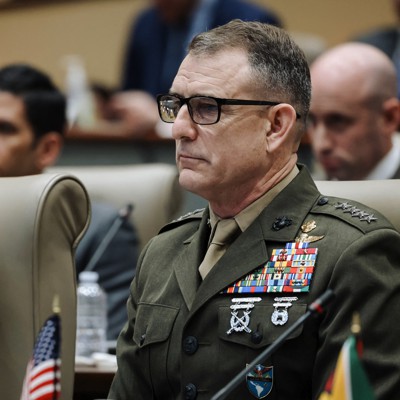
Command ambiguity during active conflict directly constrains force employment. If SOUTHCOM commanders believe they have legal cover to refuse escalatory orders, Hegseth's ability to direct strikes on Iranian command centers, civilian infrastructure, or regime targets becomes dependent on legal review cycles rather than operational tempo.
This introduces delay into a conflict where the US is already burning through missile inventory faster than production replenishes — every legal review that slows strike authorization reduces the window for achieving military objectives before ammunition depletion forces operational pause.
A combatant commander explicitly signaling willingness to refuse orders from the sitting Secretary of Defense during active military operations creates command-and-control ambiguity at the precise moment when the US is conducting sustained strikes on Iranian territory, proxies, and infrastructure.
If Donovan's statement reflects genuine operational friction over rules of engagement, it suggests either Hegseth is directing tactics that SOUTHCOM's legal counsel deems unlawful, or military leadership is preemptively distancing itself from potential escalation. Either scenario introduces friction into a conflict already consuming ammunition faster than production can replace it.
The statement does not resolve whether future orders will actually be refused — it signals the possibility, which itself becomes a constraint on Secretary Hegseth's ability to direct operations without explicit legal review.
The article does not specify what 'no quarter' rhetoric Hegseth actually issued, what specific orders or guidance Donovan believes may be unlawful, or whether any orders have actually been challenged.
Fault Lines
Strategic intelligence, synthesized daily — with a public track record. Every call graded against what actually happened.