UK-France Airborne Exercise Tests NATO Rapid Reaction Interop Under Article 5 Scenarios
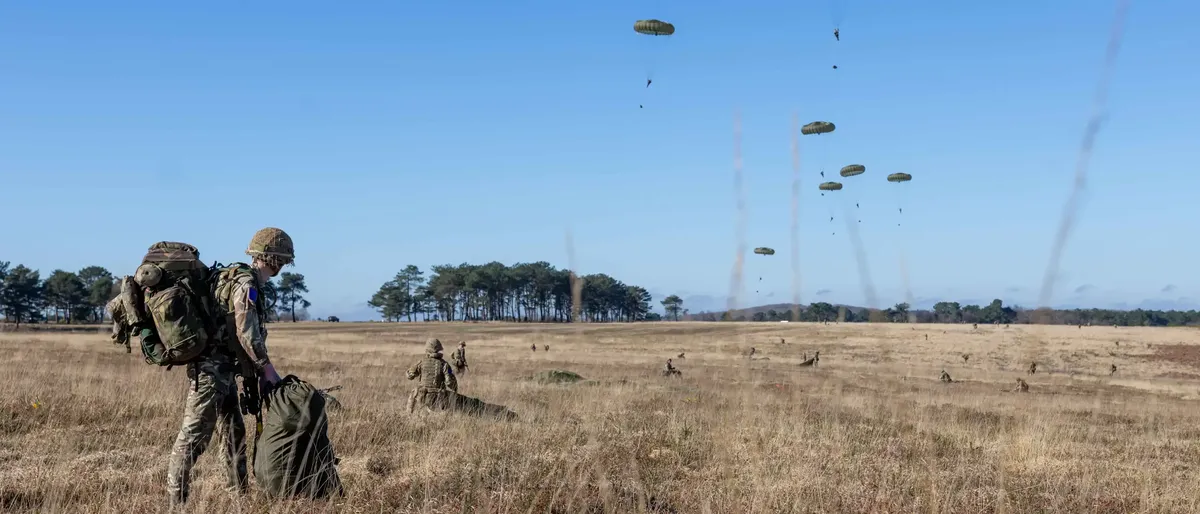
UK-France airborne interoperability testing directly feeds NATO's rapid reaction force readiness posture, which constrains allied procurement timelines for transport aviation and tactical communications.
If ORION 26 identifies C4ISR or airlift bottlenecks, both nations will likely accelerate upgrades to Airbus A400M fleets or joint tactical datalink systems—creating procurement windows for Airbus, Thales, and Leonardo in FY27. Conversely, if interop proves mature, it may reduce near-term capital requests and shift budget focus to munitions and sustainment contracts.
This signals active NATO interoperability testing between two of Europe's largest military powers in a peer-conflict scenario.
For defense primes supporting NATO rapid reaction forces—particularly those contracted for airborne platforms, C4ISR integration, and joint logistics—the exercise validates operational concepts that may drive near-term procurement decisions around transport aircraft (Airbus A400M, RAF C-17), communications systems, and ammunition supply chain coordination.
The test-under-stress environment will surface integration gaps that typically feed into FY27-FY28 capability roadmaps and allied procurement justifications.
The article does not specify exercise scale (troop count, unit types), duration, specific NATO scenario modeled, or whether observed gaps will trigger formal capability requirements or procurement recommendations.
Fault Lines
Strategic intelligence, synthesized daily — with a public track record. Every call graded against what actually happened.