Japan Commissions 10th Mogami-class Frigate; Fleet Modernization Reaches Operational Scale
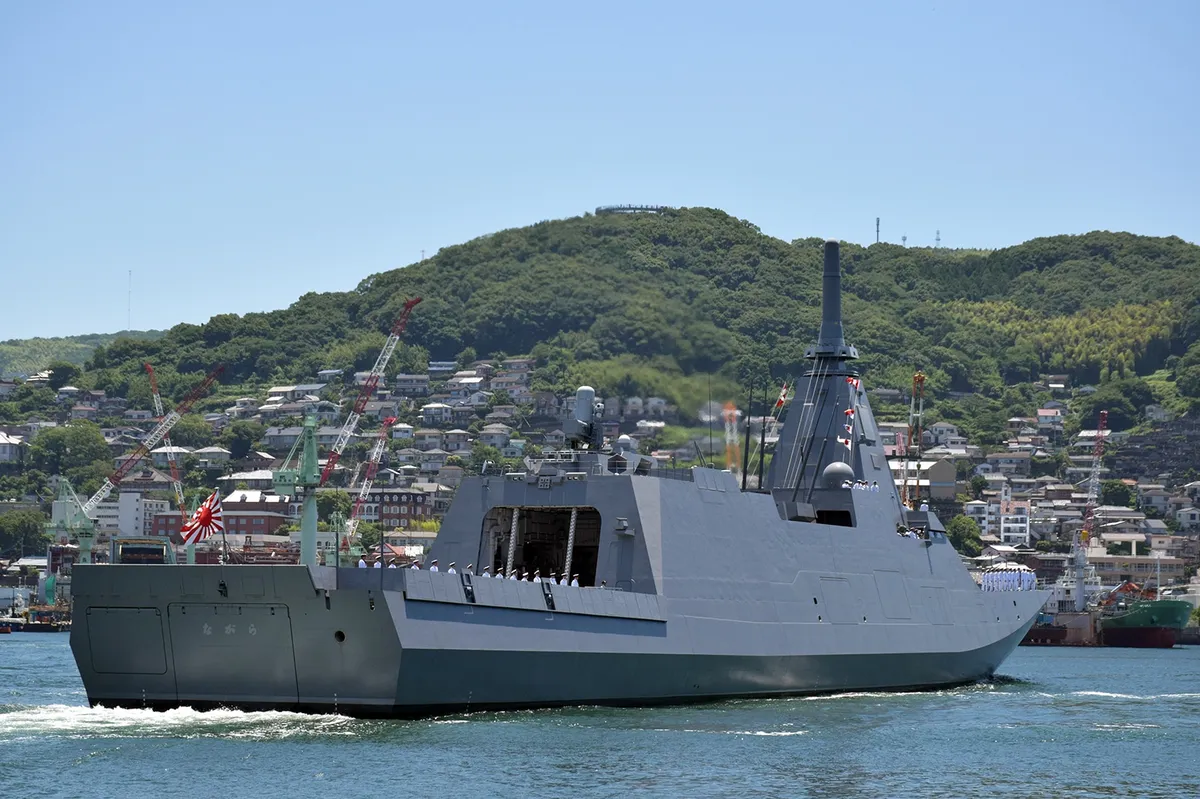
The Mogami-class expansion is part of Japan's broader Indo-Pacific posture shift: smaller, distributed, harder-to-target surface combatants that can operate independently in denied environments. This mirrors the US Navy's Distributed Maritime Operations doctrine and the AUKUS surface combatant roadmap (which includes Japan as a de facto participant).
If Japan sustains the 2032 timeline and fields 12 Mogami-class frigates, it effectively multiplies its escort capacity without proportional budget growth — the cost-per-hull is roughly 40-50% of a Atago-class destroyer.
However, the class lacks the air-defense depth of larger platforms; Japan will remain dependent on its four Kongo-class and two Atago-class destroyers for integrated air defense in high-threat scenarios.
Ten operational Mogami-class hulls means Japan now has a viable distributed-defense frigate layer that can sustain presence across the East China Sea and Philippine Sea without relying on larger, costlier destroyers for routine patrols and escort missions.
The class is designed for high endurance and automation — fewer crew per displacement than legacy Abukuma-class vessels — which matters because Japan faces chronic personnel shortages in the Maritime Self-Defense Force and cannot sustain 1980s manning ratios.
The commissioning confirms Japan is following through on its 2022 National Security Strategy commitment to field 12 Mogami-class units by 2032; two more hulls are under construction. Watch the FY2027 defense budget markup in July for whether the Diet funds Mogami-class 13-14 or pivots procurement toward the larger, more expensive FFX successor design.
What is the actual crew complement per Mogami-class hull versus legacy Abukuma-class, and does JMSDF attrition data support the automation assumption?
Fault Lines
Strategic intelligence, synthesized daily — with a public track record. Every call graded against what actually happened.