MV-22 emergency landing amid ongoing maintenance crisis tests congressional credibility
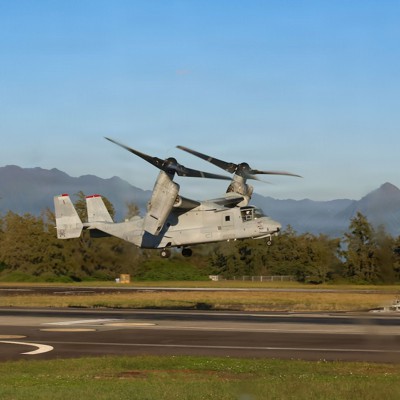
Connects across Power Projection and Market Forces. Operationally, repeated Osprey failures degrade expeditionary readiness for Marine amphibious operations (Indo-Pacific and Middle East focus); sustainment delays cascade to unit availability and training schedules.
Financially, unresolved mechanical issues lock in extended O&M spending, delay retirement timelines for aging airframes, and create uncertainty around the timeline and scope of future platform upgrades or replacements. If the Navy cannot stabilize the Osprey fleet, it may accelerate investment in alternative vertical-lift platforms (CH-53K, future FLRAA variants), shifting market share among aerospace primes.
This incident exposes a credibility gap between Navy maintenance claims and operational reality.
For program managers and investors tracking Bell Textron (prime contractor) and sustainment vendors, the pattern of failures despite repeated "progress" briefings signals either that root-cause fixes remain elusive or that maintenance readiness metrics are not predictive of actual reliability.
Congress will likely demand more aggressive corrective action, which could accelerate retrofit programs, increase O&M contract awards, or—if failures persist—trigger force-structure reconsideration of Osprey fleet size.
The timing of the incident relative to the briefing matters: if this was known before the briefing, it suggests communication failure between operational commands and leadership; if unknown, it suggests monitoring gaps.
The article does not specify: the nature of the mechanical failure, whether it was the same recurring issue or a new fault, the incident date relative to the congressional briefing, or whether this represents a frequency increase or isolated event in recent months.
Fault Lines
Strategic intelligence, synthesized daily — with a public track record. Every call graded against what actually happened.