MBDA Stratus RS Missile Exceeds Exocet Range by Far; Franco-British SEAD Capability Awaits Development Contract
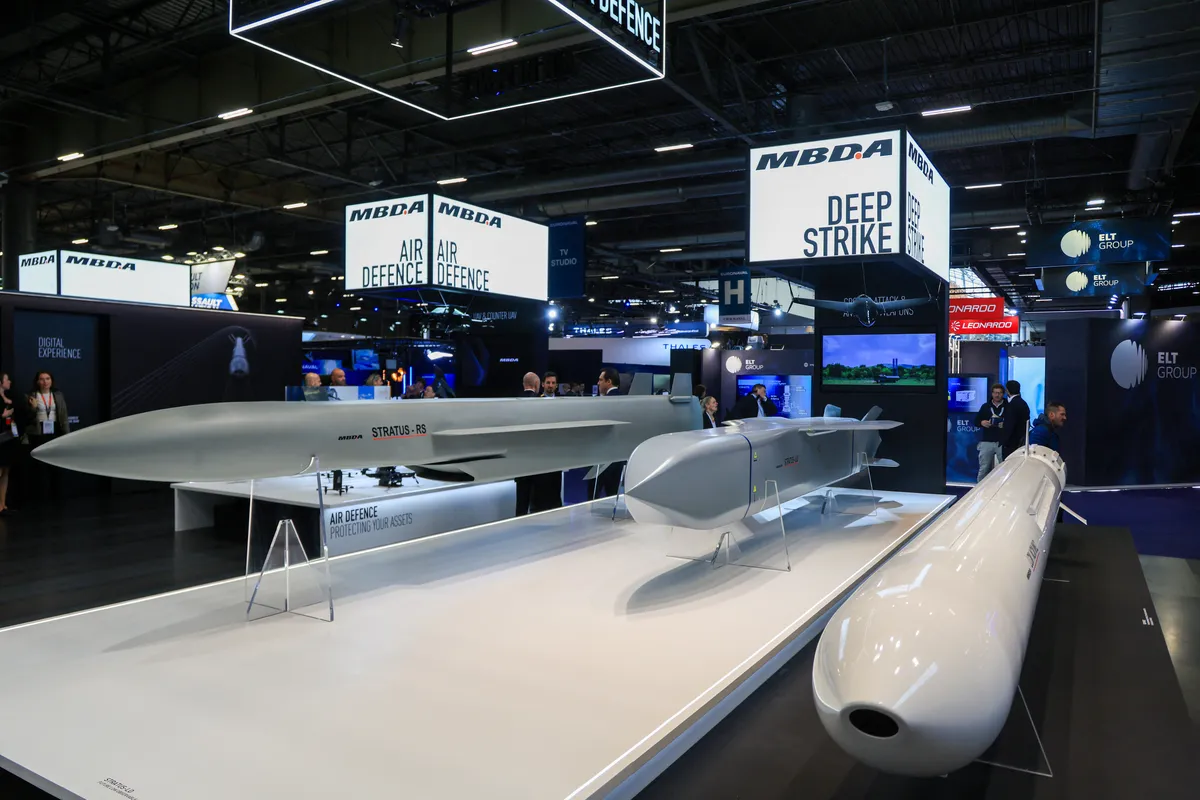
Stratus RS fills a specific vulnerability: European air forces can strike ships and ground targets, but lack a fast, maneuverable SEAD missile to clear enemy air defenses before committing manned platforms.
The ramjet architecture (borrowed from Meteor) trades endurance for speed—it beats Storm Shadow's subsonic profile in a defended airspace, which is the calculus that NATO's 2024 doctrine shift toward offense-first posture demands.
The simultaneous development of Stratus LO (stealthy, larger warhead) creates a choice architecture: RS for time-critical targets requiring speed, LO for standoff strikes where signature matters more than time.
Europe's air-defense suppression inventory has been a NATO-identified gap since Russia's eastern positioning hardened the alliance's offensive doctrine in 2024—Stratus RS directly addresses that vulnerability.
France and the UK are now formalizing a binding development timeline (contract signature expected within months, flight test before decade's end) that commits €1-2B+ in sunk costs to a dual-track strike architecture (RS for speed, Stratus LO for stealth) by 2031.
This forces Dassault, Eurofighter consortium, and GCAP partners to lock in integration schedules four years before service entry, which means Rafale and Typhoon sustainment budgets must absorb integration costs starting in FY27.
Watch the French DGA contract signature in Q1 2027—if delayed past March, the 2030 flight-test milestone becomes unachievable, which would slip service entry to 2032 and expose the NATO air-defense gap for another 18-24 months.
What is the estimated cost of the Stratus RS development program, and how much of that burden falls on France versus the UK?
Fault Lines
Strategic intelligence, synthesized daily — with a public track record. Every call graded against what actually happened.