Senate Defense Bill Clears Multiyear Procurement Authority for F-35A and F-15EX
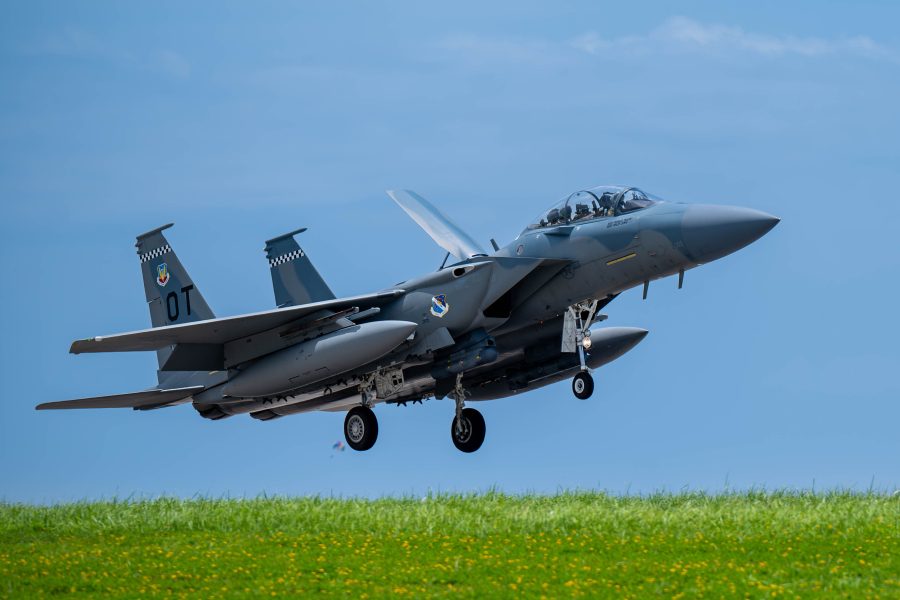
Multiyear authority is a forcing function for supplier capacity planning. If Lockheed commits to a 5-year F-35 production ramp via multiyear contract, it must pre-position Pratt & Whitney engine production and Collins avionics builds 18-24 months ahead—locking in subcontractor capacity and labor.
Conversely, if House Democrats block this on grounds that the Air Force should fix the 44% MC rate before expanding buys, the Fort Worth line faces a 2027-2028 capacity trough that ripples into Block 4 sustainment contracts. RTX's margin on F-15EX depends on stable annual buy rates; annual appropriations force quarterly repricing and supplier churn.
Multiyear authority reduces per-unit costs by 3-5% through production stability and supplier commitment certainty—critical for Lockheed Martin's Fort Worth F-35 line, which operates at 44% mission-capable rate per the GAO's June 2026 report and faces sustained readiness collapse.
The Senate action forces a House-Senate conference negotiation: if the House strips the authority, the Air Force reverts to annual buys and loses pricing leverage; if it passes, Lockheed locks $8-12B in F-35 throughput and RTX locks F-15EX avionics and engine contracts through FY29.
Watch the House Armed Services markup in late June for whether the Democratic majority pushes back on long-term commitments during a readiness crisis.
Does the Senate bill quantify the multiyear tranche—how many F-35As and F-15EXs across how many years? The article doesn't specify the unit count or dollar value, which determines whether this is a 200-aircraft commitment (roughly $24B) or a smaller block.
Fault Lines
Strategic intelligence, synthesized daily — with a public track record. Every call graded against what actually happened.