Navy Tests Aircraft Carrier Power Generation for Shore Base; Norfolk Installation Selected for Summer Pilot
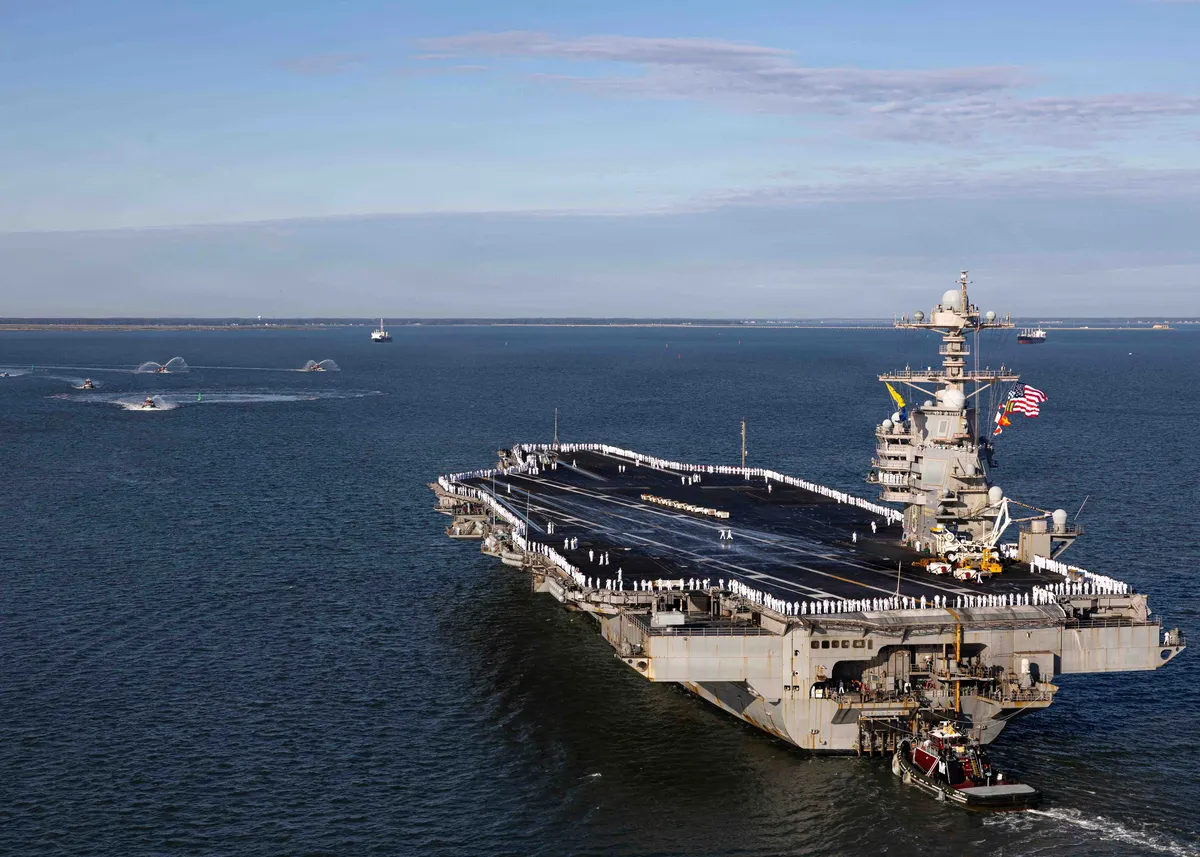
If the pilot succeeds, it creates a perverse incentive: forward-deployed carriers become distributed power plants rather than strike platforms. The Navy would need 3-4 additional hulls to maintain both power-generation rotation and operational tempo — a $50B+ shipbuilding commitment not yet in the FYDP.
Conversely, if the test fails (thermal stress, fuel consumption, integration complexity), it signals that the service is grasping for solutions to shore-base grid fragility that should be solved through hardened terrestrial infrastructure instead. Either way, this is a symptom of insufficient power resilience at critical bases, not a cure.
This pilot exposes a hard constraint on carrier availability and shore-base resilience.
If Norfolk can draw 50+ MW from a carrier for extended periods, it ties down a $13B asset to grid-stabilization duty — meaning fewer deployable carriers for INDOPACOM during the Taiwan contingency window or for Hormuz escort rotations. The real decision point: does this work at scale, or does it reveal that carrier power plants aren't sized for sustained shore load?
Watch whether NAVSEA requests emergency funding for land-based backup generation after the summer test concludes.
What's the actual power output and duration the Navy expects from the carrier? Is this a proof-of-concept (days) or a sustained capability (weeks/months)? The difference determines whether this is a resilience tool or a logistical liability.
Fault Lines
Strategic intelligence, synthesized daily — with a public track record. Every call graded against what actually happened.