Navy Chief Warns Iran Ops Degrade China Deterrence Capacity Mid-Campaign
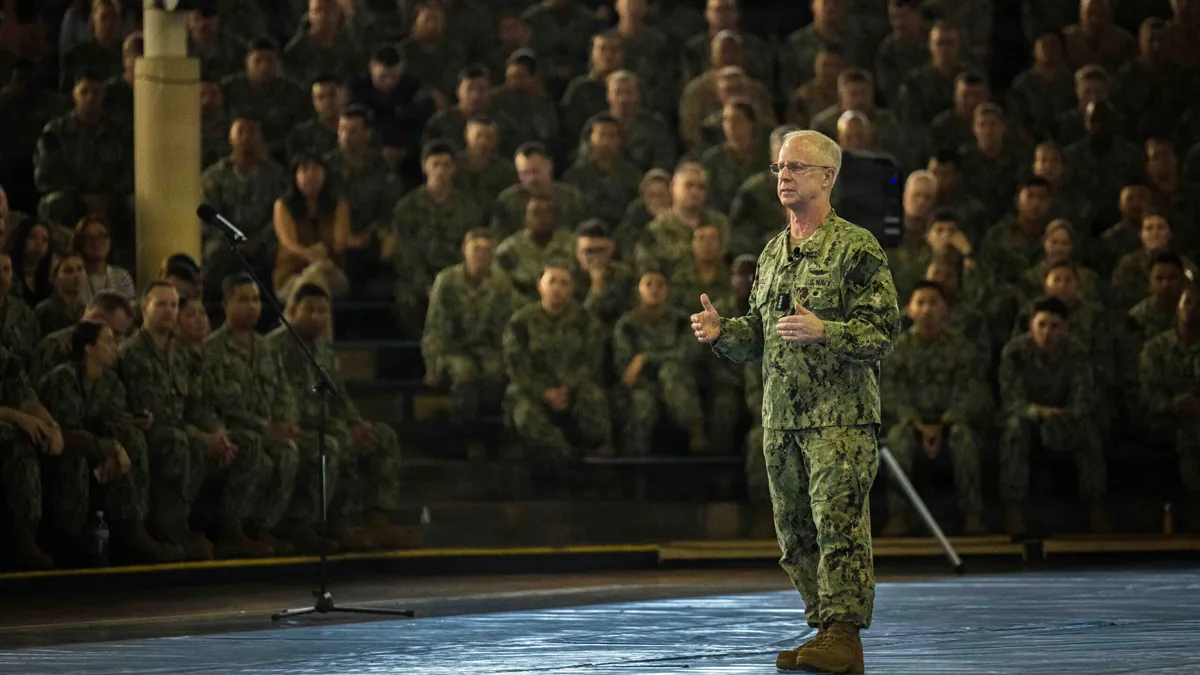
Caudle's statement creates a documented constraint that will resurface in FY27 Pacific Command budget justifications and force structure reviews.
If the Iran campaign extends beyond Q2 2026 (as Netanyahu's 'halfway point' claim suggests), the stated deterrence gap will force either accelerated procurement to backfill Pacific posture or explicit Congressional trade-offs between Iran containment and Taiwan contingency readiness.
This converts an operational concern into a budgeting and industrial policy variable—contractors bidding Pacific-focused programs (Lockheed's Aegis upgrades, RTX's air defense sustainment, Huntington Ingalls' destroyer production) now have a documented rationale for expedited funding.
Caudle's statement is the first on-record acknowledgment from a serving senior commander that the Iran operation is creating a measurable deterrence deficit in the Indo-Pacific.
This matters because it signals internal Pentagon recognition that the campaign has resource costs beyond immediate operational expenses—specifically, it degrades the force posture that underwrites US credibility in Taiwan contingency planning and freedom-of-navigation operations.
The statement does NOT indicate a policy shift away from Iran operations (which remain active per prior signals), but it does establish the strategic trade-off that will likely frame budget and force allocation debates in FY27 planning. Watch whether this concern translates into Congressional pressure to accelerate Pacific-focused procurement or whether the administration dismisses the constraint as temporary.
The article does not specify which specific platforms, units, or capabilities Caudle views as most degraded for China deterrence—e.g., carrier strike group availability, air defense asset rotation, or intelligence collection capacity.
Fault Lines
Strategic intelligence, synthesized daily — with a public track record. Every call graded against what actually happened.