2025-Made Western Chips Found in Russian Drones; Supply Chain Leakage Widens
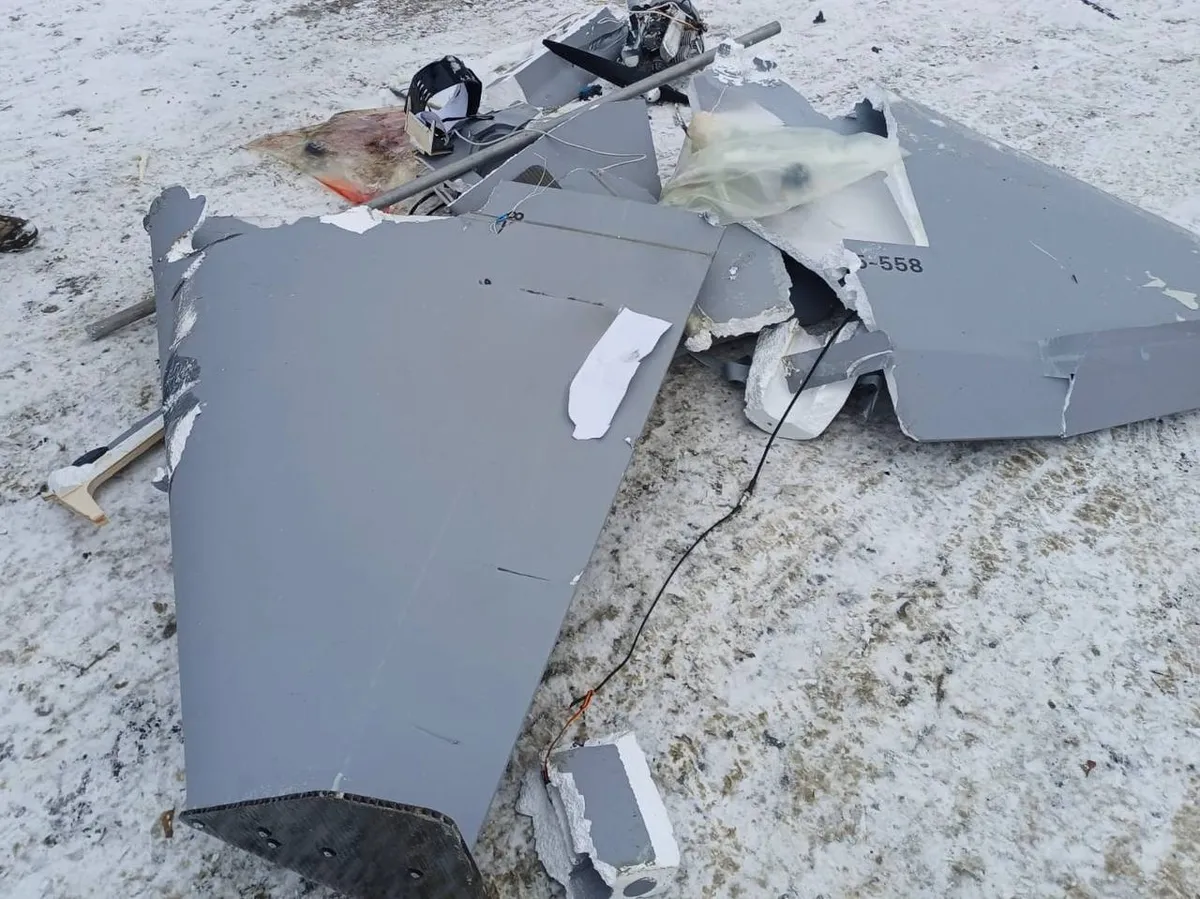
The leakage of 2025-vintage Western chips into Russian drones collapses the assumption underlying current export controls: that denial at the source prevents use in military systems. If Russia can sustain 1,600 drones per week with Western semiconductors, the attrition burden on Ukraine's air defense increases while the cost-exchange ratio favors Russia — a $500 drone with a $50,000 air-defense intercept.
This forces a recomputation of Ukraine's ammunition and air-defense sustainment contracts, potentially triggering early renegotiations on Patriot and HIMARS ammunition buys.
This is not a surprise — it's evidence that export controls are not working at scale.
Russia is acquiring 2025-vintage chips, meaning components manufactured less than 12 months ago. The breadth of sources (six countries across three continents) suggests either systematic diversion at the distributor level, gray-market procurement through intermediaries, or theft. Sanctions policy assumes a hermetic seal; this suggests a sieve.
The immediate implication: current controls on chip sales to Russia are theater. The second-order implication: if Russia can sustain drone production at 1,600 units weekly (per Zelensky's May 2 report) using Western silicon, the attrition math changes — Ukraine faces not a logistics problem but a production asymmetry that export controls cannot fix.
Tightening controls now requires either secondary sanctions on the six source countries' distributors or a shift to component-level traceability that doesn't exist yet.
How many of these 2025-made chips are diverted from authorized civilian channels versus stolen from warehouses or intercepted in transit? The distinction determines whether the fix is enforcement (catch the smugglers) or redesign (make chips unhackable/traceable).
Fault Lines
Strategic intelligence, synthesized daily — with a public track record. Every call graded against what actually happened.