Greece Orders KC-390 Tankers From Embraer With Options for More; First Delivery Expected 2027
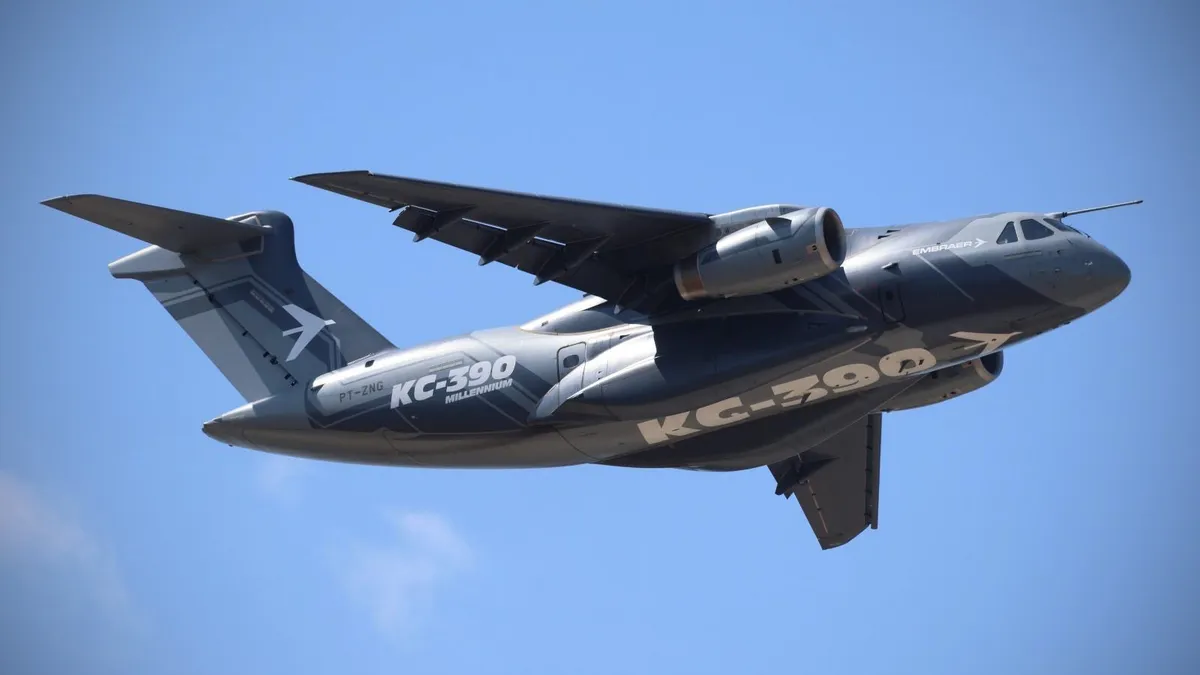
Embraer has now locked three European NATO customers in 2026 alone (Greece, Colombia, UAE — the latter two non-NATO but regionally aligned). The KC-390 is systematically displacing the C-130H/J in allied air forces, which means Lockheed Martin faces margin compression on legacy transport as allied fleets modernize.
Portugal's willingness to serve as a government-to-government conduit for third-party sales suggests Brussels is comfortable with Embraer as a NATO-tier supplier, which opens the aperture for future tanker or transport buys by other allies.
Greek fighter operations in the Aegean now gain 4,000+ km unrefueled radius, which closes an operational gap that has shaped Turkish-Greek air competition for five decades.
The KC-390's hose-and-drogue system refuels F-16s and Rafales simultaneously, meaning Athens can sustain combat air patrols over contested airspace without diverting to Cyprus or Crete for turnarounds.
Portugal's government-to-government intermediary role signals NATO standardization of tanker pooling — the Lisbon agreement explicitly contemplates shared access across allied air forces, which means Greek KC-390s become a regional asset, not just a national one.
Watch the 2027 delivery date: if the first aircraft enters service before Turkey's own aerial refueling modernization (currently stalled in procurement), the Aegean correlation shifts measurably.
Does the Greek purchase include provisions for NATO-wide tanker-pool access under the Portuguese intermediary framework, or is this a bilateral asset? The article mentions Lisbon's options for 'other NATO members' but doesn't specify whether Athens has committed to sharing.
Fault Lines
Strategic intelligence, synthesized daily — with a public track record. Every call graded against what actually happened.