Greece Orders $750M Israeli PULS Rocket Artillery; NATO Eastern Flank Adds Precision Strike Capacity
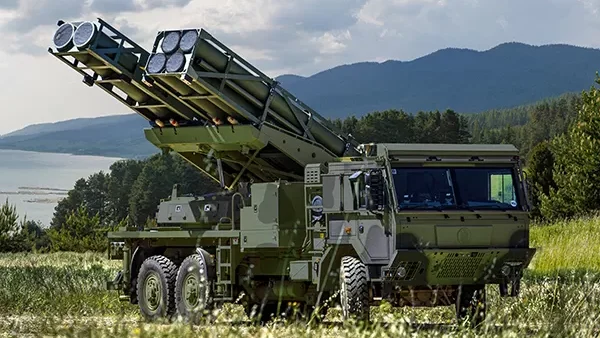
Greece's acquisition of indigenous precision strike capability reduces its operational dependence on US munition stocks and airfield access — a dependency that is now visibly strained by the Iran campaign's consumption of Tomahawk and SM-6 inventory (FY27 budget requests show 1,200% Tomahawk surge).
If PULS deployment to Greek territory proceeds in parallel with US force rotations to the Middle East, NATO's Eastern Flank gains a degree of autonomous firepower.
Conversely, if PULS integration into NATO targeting cycles is delayed or incomplete, Greece acquires a national-command strike system that operates outside allied air defense coordination — a fragmentation risk if Turkish or Russian air activity forces real-time deconfliction decisions.
Greece's procurement of PULS extends NATO's precision strike footprint into the Eastern Mediterranean at a moment when allied air defenses and offensive systems are under stress from the Iran campaign.
PULS fires GPS-guided munitions with 300km+ range, giving Greece independent strike capacity against targets in Turkish airspace or beyond — a capability historically dependent on US or allied support. The timing suggests Greece is hedging against sustained US attention to the Middle East and building autonomous deterrence against Turkish escalation.
However, the article provides no detail on system count, delivery schedule, or integration with NATO air defense networks — critical variables for assessing whether this enhances or fragments allied interoperability in a contested theater.
The article does not specify how many PULS systems Greece is acquiring, when deliveries begin, or whether the systems will integrate with NATO command-and-control infrastructure or operate under Greek national command.
Fault Lines
Strategic intelligence, synthesized daily — with a public track record. Every call graded against what actually happened.