UK Parliament hears Russia leads in undersea warfare; UK infrastructure vulnerable
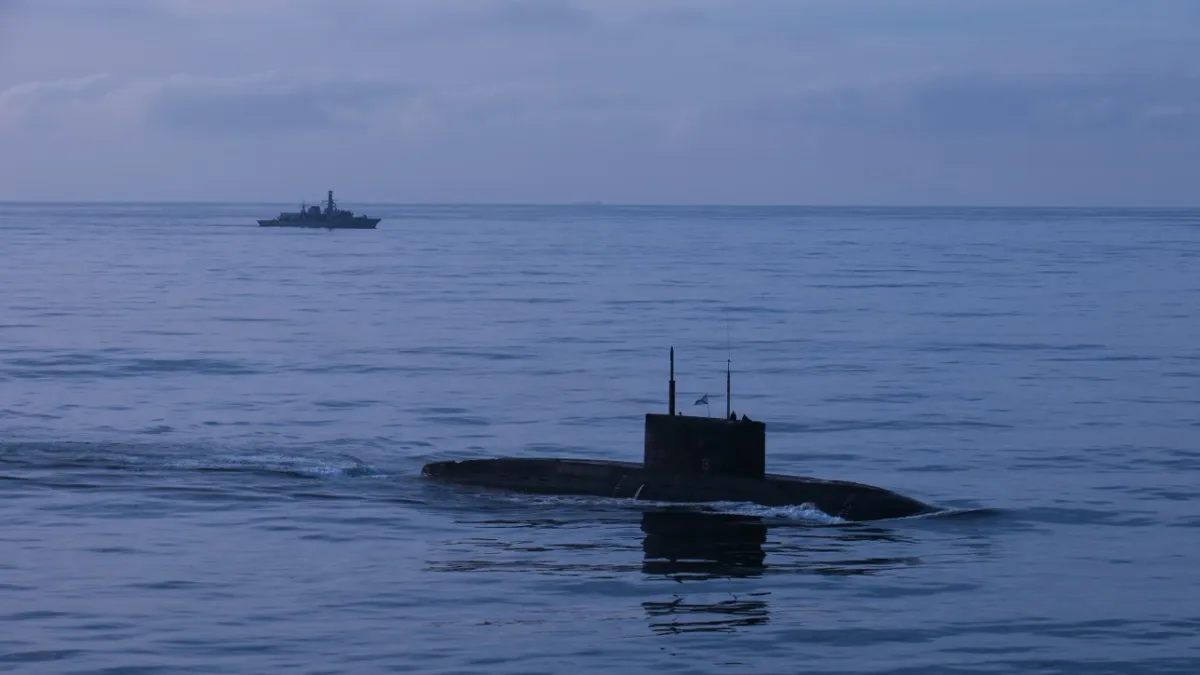
Connects Power Projection (submarine/undersea force design and readiness gap) to Geopolitical Friction (UK-Russia competition in shared waters and critical infrastructure). The dual-use nature of data cables and energy infrastructure creates a secondary link to Market Forces if UK insurers, telecom operators, or energy firms respond by demanding government-funded hardening or escort services.
However, the article does not detail any of these second-order effects—it reports a parliamentary warning, not a policy decision or market reaction.
This signals parliamentary awareness of a capability asymmetry in a domain critical to both economic resilience and military operations.
UK data cables and energy infrastructure are dual-use targets: damage disrupts financial markets, communications, and civilian energy supply, while also degrading military C4I.
If the testimony reflects a genuine operational gap rather than a rhetorical framing, it may trigger UK defense spending reallocation toward undersea detection, hardening, and escort capabilities—affecting naval shipbuilding and sonar contractors.
However, the article provides no detail on the scope of the claimed Russian advantage (specific vessel classes, GUGI capabilities, detection ranges) or UK's current posture, making it impossible to assess whether this drives procurement action or remains a budget argument.
The immediate value is as an indicator of parliamentary pressure on undersea resilience; the market impact depends on what the UK Ministry of Defence actually funds in response.
The article does not specify which Russian capabilities (submarine classes, GUGI sensor networks, mine-laying capacity) are driving the assessment, what specific UK vulnerabilities were identified, or whether this testimony is linked to a formal capability review or procurement roadmap.
Fault Lines
Strategic intelligence, synthesized daily — with a public track record. Every call graded against what actually happened.