Medinsky's 'Every Inch' Vow Underscores Russia's Uncompromising Stance as Abu Dhabi Talks End Without Breakthrough
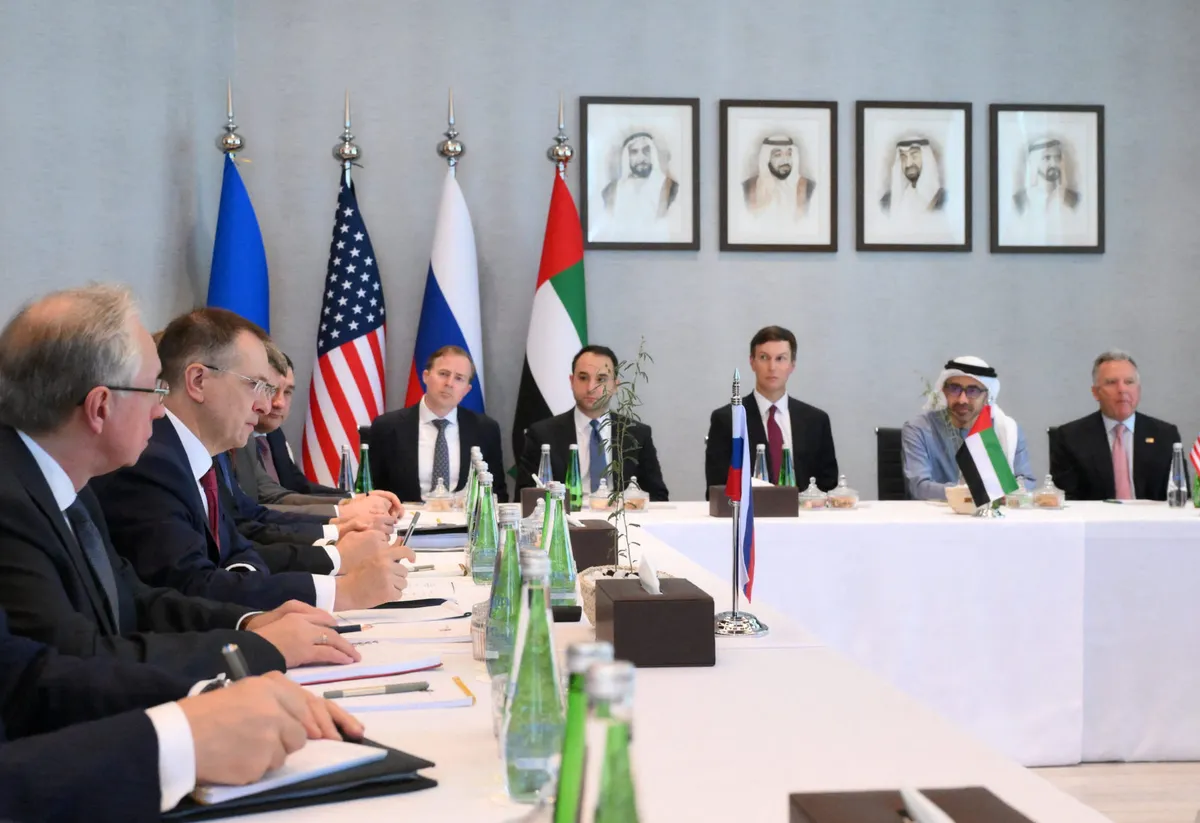
If Russia's opening position requires Ukraine to vacate the Donbas fortress belt before any ceasefire, then US pressure on Kyiv to accept a land-for-peace deal faces a military-logic problem that no diplomatic formula resolves: Ukraine's army and civilian leadership cannot agree to terms that leave the country's eastern defense architecture dismantled.
That constraint pushes the the US administration toward either accepting a frozen conflict on current lines — which Moscow has already rejected — or applying coercive pressure on Ukraine to concede territory its generals say is indefensible to surrender.
The Atlantic Council piece notes Putin's historical claims are not limited to eastern Ukraine, which means any Donbas deal would not close the question of further Russian demands.
Medinsky's statement, combined with Russia's standing demand that Ukraine withdraw from the remaining 10 percent of the Donbas still under Kyiv's control, means the gap between the two sides is not a matter of negotiating margin — it is a demand for Ukraine to surrender a fortress belt of cities its military considers essential to national defense.
Ukrainian negotiator David Arakhamia's suggestion that a solution is possible by year-end has no territorial concession behind it. The Atlantic Council analysis, consistent with the prior signal on Abu Dhabi published November 12, frames Medinsky's rhetoric as a direct echo of Putin's own framing of the war — which critics argue extends well beyond the Donbas.
Has the the US administration presented Russia with a specific territorial map as a basis for negotiation, or are US envoys still working from Ukraine's front-line proposal — and if the former, what was Moscow's formal response?
Fault Lines
Strategic intelligence, synthesized daily — with a public track record. Every call graded against what actually happened.