Russia's Shadow Fleet Evolves From Sanctions Evasion to Active Hybrid Warfare Platform
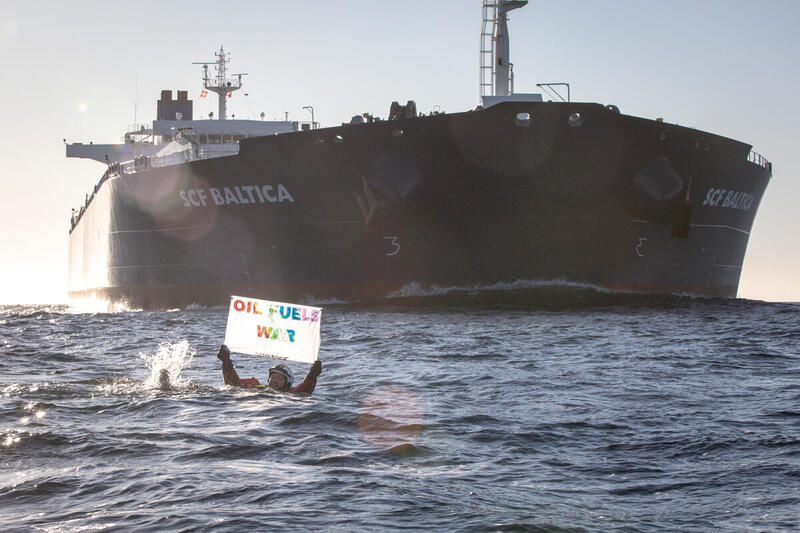
The timing connects to the broader shadow fleet escalation visible in the recent context: US Navy blockade operations in the Strait of Hormuz have redirected 91 commercial vessels and disabled four ships, which raises the operational cost of Iran-Russia sanctions evasion networks.
If Russia is shifting shadow fleet assets from pure sanctions-busting to hybrid warfare platforms, it signals Moscow is hedging against further tightening of maritime interdiction — converting stranded tankers into force multipliers rather than writing them off.
If Russia is operationalizing shadow fleet vessels as surveillance and sabotage platforms, European naval commands face a targeting problem they haven't solved: merchant vessels that are nominally civilian but conduct reconnaissance and coordinate attack operations occupy a legal and operational gray zone that existing rules of engagement don't cleanly address.
NATO Eastern Command's recent adoption of an 'autonomous zone' doctrine (treating any vehicle movement in contested areas as hostile) was premised on kinetic threats from military assets — not on civilian-flagged commercial shipping conducting espionage and infrastructure attacks.
The constraint is real-time intelligence fusion: distinguishing a shadow tanker conducting routine cargo operations from one staging a subsea cable cut or drone launch requires persistent maritime domain awareness that EUCOM and Standing NATO Maritime Group One do not currently possess across the full Baltic-North Sea corridor.
Watch for NATO's next maritime posture update (expected in Q3 2026) to see whether they formally designate shadow fleet vessels as military targets or attempt a narrower designation tied to specific attack signatures.
Does the investigation identify specific shadow fleet vessels and their documented attack coordination, or is it pattern-analysis based on vessel movements and known sabotage incidents?
Fault Lines
Strategic intelligence, synthesized daily — with a public track record. Every call graded against what actually happened.