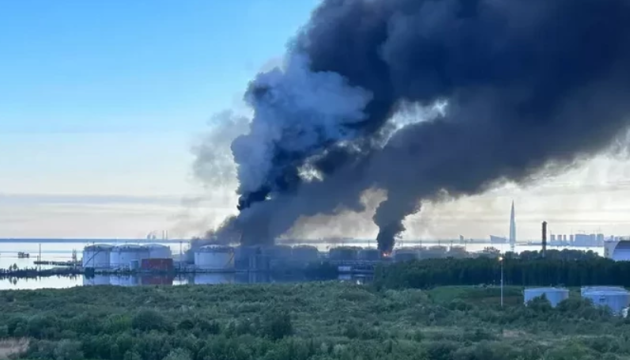
Zelensky Confirms Strikes Deep Inside Russia; Expands Target Set to St. Petersburg, Kronstadt Naval Base
If Ukraine has operationalized long-range strike capability against Russian rear areas, the calculus for European air defense procurement shifts. Poland's €16.5B domestic heavy-weapons buy (prior signal) now faces pressure to include longer-range air defense — not just forward-deployed point defense. Germany and France will face pressure to accelerate IRIS-T and SAMP/T deliveries to Ukraine.
Russia's response determines whether this escalates into strikes on Ukrainian power generation (winter preparation) or remains theater-contained.
Ukraine is now conducting sustained strikes against Russian strategic infrastructure — energy, naval, and industrial — at extended range.
This signals a shift from reactive air defense (602 drones and 40 missiles intercepted on June 1 alone, per prior signal) to offensive targeting that compresses Russia's operational depth. Zelensky's public confirmation, rather than deniable attribution, indicates political decision to raise the cost of the war visibly. The Kronstadt naval base and St.
Petersburg oil terminal are 500+ km from the front — Ukraine is demonstrating either new long-range strike capability or successful drone penetration of Russian air defense, both of which force Russia to defend rear-area targets and divert air assets from the forward line.
Watch whether Russia retaliates against Ukrainian civilian infrastructure in the next 48-72 hours, which would signal escalation into a tit-for-tat cycle rather than strategic restraint.
What specific weapons systems conducted these strikes — Storm Shadow/SCALP cruise missiles, long-range drones, or a new platform? The method matters because it determines whether Ukraine's capability is consumable (missiles) or sustainable (drone swarms).
Fault Lines
Strategic intelligence, synthesized daily — with a public track record. Every call graded against what actually happened.