TDF Advances into Disputed Tigray Territory, Federal Resistance Collapses in Raya
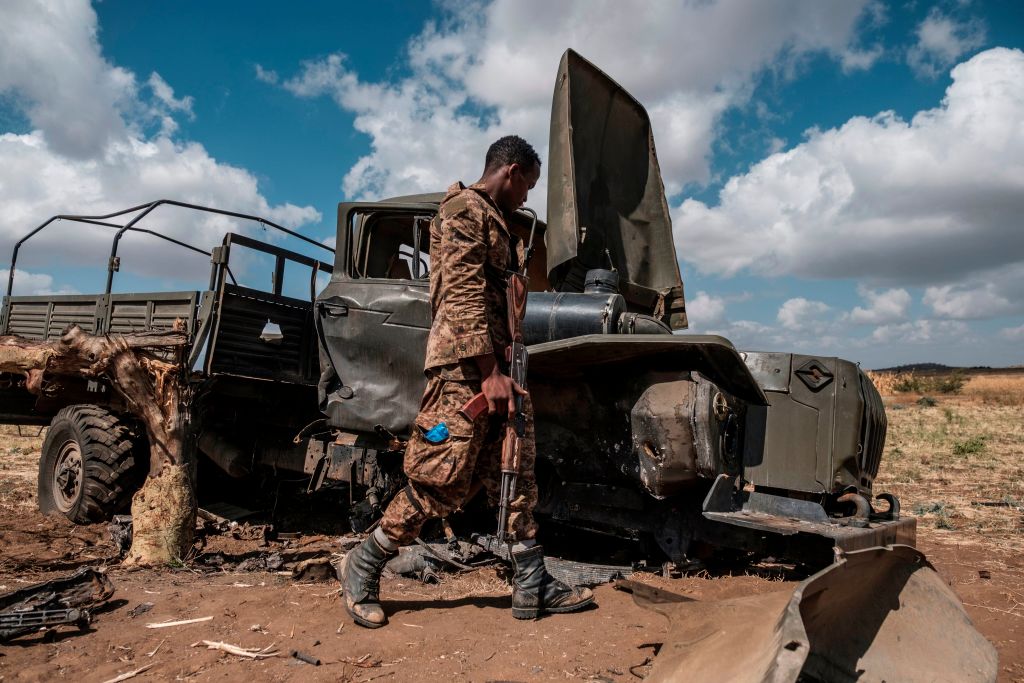
If federal military capacity in Tigray has degraded sufficiently to permit uncontested TDF advances, foreign military advisors and contractors supporting Ethiopian federal forces face mission creep in a conflict that nominally ended — requiring reassessment of force protection posture and rules of engagement.
Conversely, if this is a deliberate federal retreat to consolidate around core holdings, it reduces the immediate risk of major-power escalation but locks in a two-state de facto partition, complicating any future UN mediation and signaling to other regional actors (Eritrea, Egypt) that Ethiopian state cohesion is conditional.
This marks the first major TDF territorial gain since the November 2022 ceasefire and suggests either a deliberate federal strategic withdrawal or a collapse in federal-Amhara coordination in the contested border zones.
If the federal government has ceded Raya without contest, it signals either a shift in Addis Ababa's willingness to accept territorial losses or a fracture in the Amhara militia alliance — both carry different risks for regional stability and foreign military involvement.
The absence of reported federal resistance is the critical unknown: whether this reflects policy choice or capability loss determines whether escalation is controlled or accelerating.
The article does not specify whether federal forces were ordered to withdraw, lacked the capability to resist, or were absent entirely. It also does not clarify the current status of the November 2022 ceasefire agreement or whether either party has formally renounced it.
Fault Lines
Strategic intelligence, synthesized daily — with a public track record. Every call graded against what actually happened.