Air Force Ringleader Exercises Test Multi-Domain Sensor Integration for Target Engagement
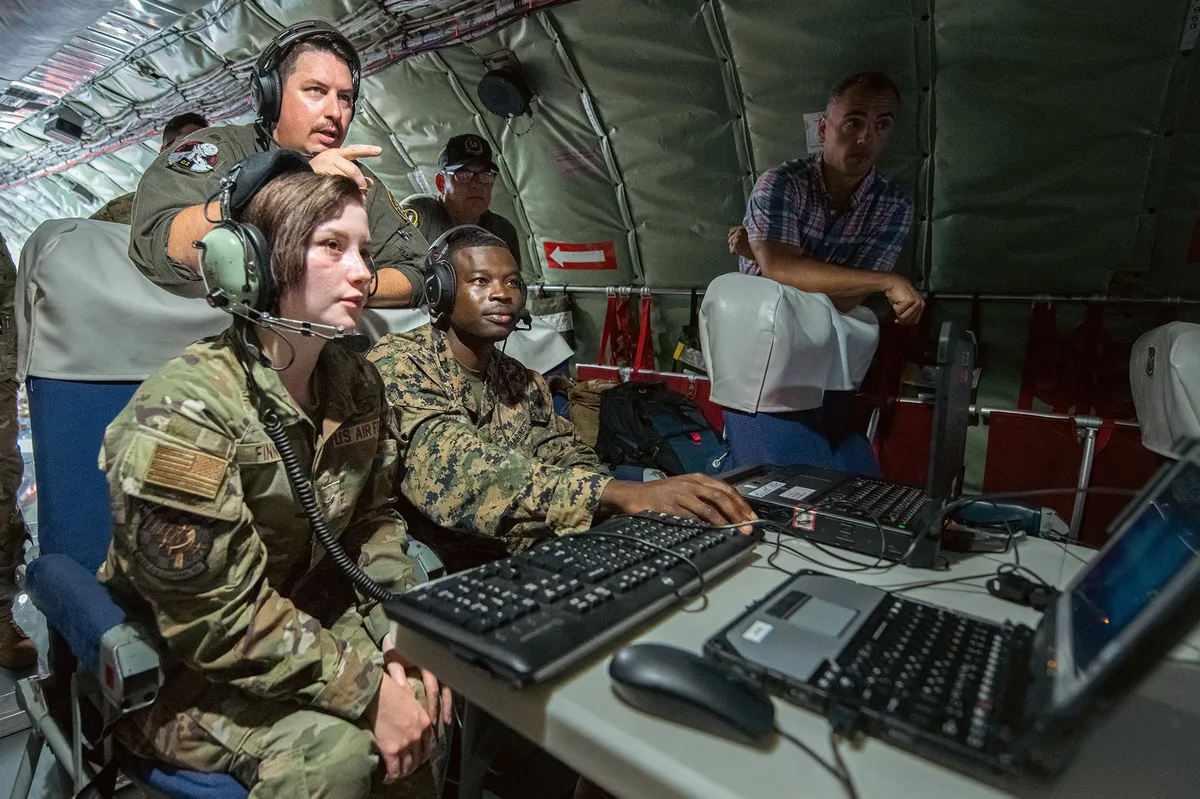
Ringleader results directly feed JADC2 procurement decisions and software architecture standards. If exercises reveal latency or fusion failures, the Air Force will either accelerate funding for specific middleware platforms (forcing reprioritzation within the FY27 budget cycle) or delay NGAD sensor integration timelines, which cascades into allied interoperability commitments with Japan, South Korea, and Australia.
Conversely, if Ringleader validates a particular contractor's fusion stack, that vendor gains leverage in follow-on JADC2 competitive awards and can establish de facto standards for multi-domain data exchange.
Ringleader targets a concrete operational gap: the transition from siloed sensor networks to fused, real-time targeting.
If successful, this demonstrates progress on the DAF's joint all-domain command and control (JADC2) architecture—a prerequisite for contested operations where sensor-to-shooter latency directly determines survivability. The exercises will expose integration bottlenecks between legacy ground radars, airborne platforms, and space ISR that currently constrain engagement timelines.
Contractors supporting sensor fusion (Northrop Grumman, Raytheon, L3Harris) and command-and-control software (Palantir, Scale AI, others in the JADC2 ecosystem) will use results to validate or revise product roadmaps. Failure to achieve reliable multi-domain fusion would delay NGAD fielding and force continued reliance on distributed, slower engagement cycles—a strategic liability against peer competitors.
The article does not specify which sensor systems will participate, the geographic scope of exercises, the timeline for results, or whether Ringleader will include adversary-representative electronic warfare or jamming.
Fault Lines
Strategic intelligence, synthesized daily — with a public track record. Every call graded against what actually happened.