India Rejects US Pressure on Russian Oil Purchases; Signals Non-Alignment in Active Conflict
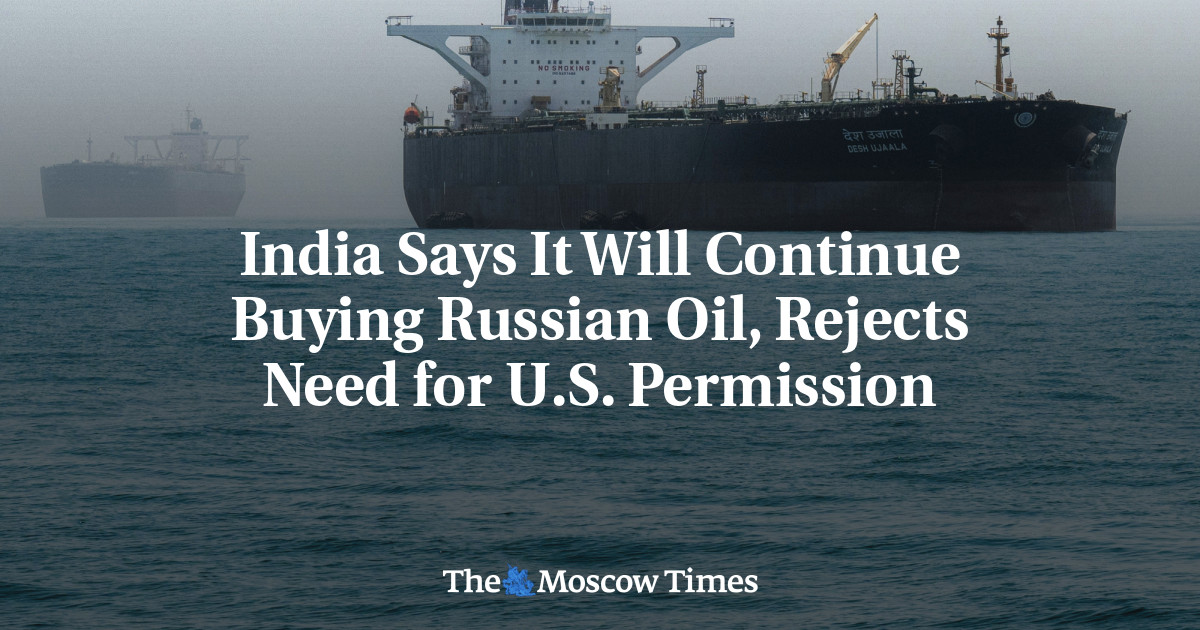
India's refusal to subordinate energy policy to U.S. direction reduces Washington's ability to impose economic isolation on Russia while Russia is actively feeding Iran targeting intelligence on U.S. naval assets in the Persian Gulf.
If India's energy imports sustain Russian fiscal capacity, Russia has reduced incentive to withdraw intelligence support to Iran, which directly extends the operational effectiveness of Iranian strikes against U.S. forces (as seen in the March 7 IRGC strikes on NSA Juffair and AWS data centers).
This creates a causal link: energy autonomy → Russian revenue stability → sustained Iran intelligence support → extended U.S. force exposure.
This signals that India is maintaining strategic autonomy from U.S. policy during an active Middle East escalation where Washington is seeking allied alignment.
India's refusal to condition energy purchases on U.S. approval directly undermines Washington's ability to enforce secondary sanctions or coordinate energy isolation of Russia.
For defense contractors and program managers: this fractures the assumption of allied cohesion that underpins procurement timelines for integrated air defense (where allied interoperability is priced in) and signals that U.S. leverage over non-NATO partners is constrained during crises.
If India's position holds and other Global South actors follow, it weakens the economic cost imposed on Russia for supplying Iran with targeting data (per March 6 reporting), potentially extending Russia's ability to sustain that intelligence pipeline.
The article does not specify what triggered India's statement now or whether the U.S. made a formal request for Indian compliance.
Fault Lines
Strategic intelligence, synthesized daily — with a public track record. Every call graded against what actually happened.