Iran Blockade Shifts From Kinetic to Economic Attrition; Ceasefire Masks Sustained Pressure Campaign
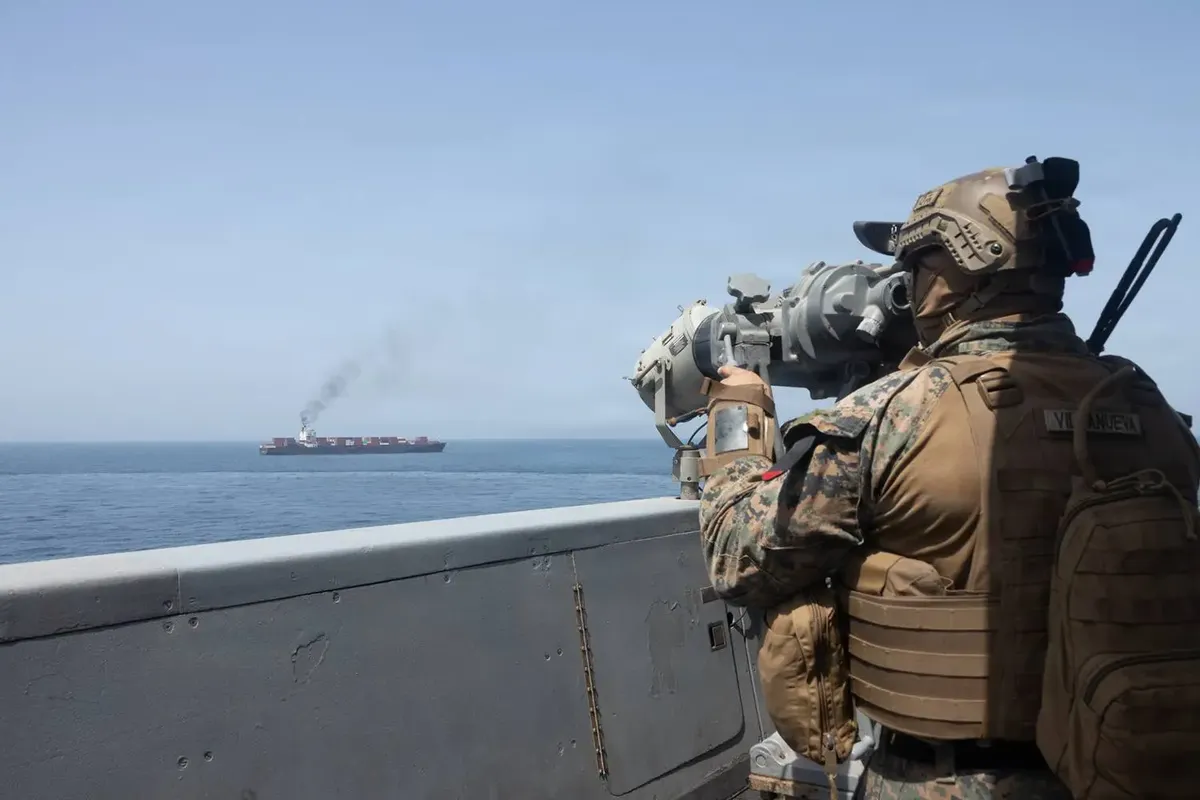
Economic attrition via blockade directly feeds the $1.5T FY27 defense budget (April 21 signal) and the third-carrier deployment (April 23 signal) — sustained Hormuz enforcement requires permanent carrier rotation, which justifies the budget increase to Congress.
The 30-nation military planning conference (April 22 signal) now operates under a different assumption: not a rapid reopening operation but a years-long multinational policing regime.
This also validates Singapore's warning (April 22 signal) that Hormuz is a 'dry run' for potential Malacca closure in a U.S.-China conflict; the blockade is functioning as a proof-of-concept for economic strangulation through maritime control.
This reframes the Hormuz blockade from a temporary enforcement action into a sustained attrition strategy.
If correct, it means the three-carrier deployment (announced April 23) and Trump's 'shoot and kill' rules of engagement (April 23) are not prelude to negotiated reopening but infrastructure for indefinite economic coercion.
The ceasefire buys diplomatic cover while the blockade compounds Iran's fiscal hemorrhage—oil exports remain cut, sanctions remain in place, and the Navy maintains kinetic authority over any attempt to break the closure.
This extends the conflict timeline from weeks into months, forcing allied navies into sustained Hormuz presence and raising the probability of accidental escalation as fatigue and rules-of-engagement creep accumulate.
Does Trump's 'unified response' demand on Iran (April 22 signal) actually require uranium handover, or is that demand a negotiating anchor he's willing to drop once the blockade inflicts sufficient pain? The ceasefire's duration hinges on whether it's a genuine off-ramp or a holding pattern.
Fault Lines
Strategic intelligence, synthesized daily — with a public track record. Every call graded against what actually happened.