Australia Commits A$11B to Collins Submarine Life Extension Over 10 Years
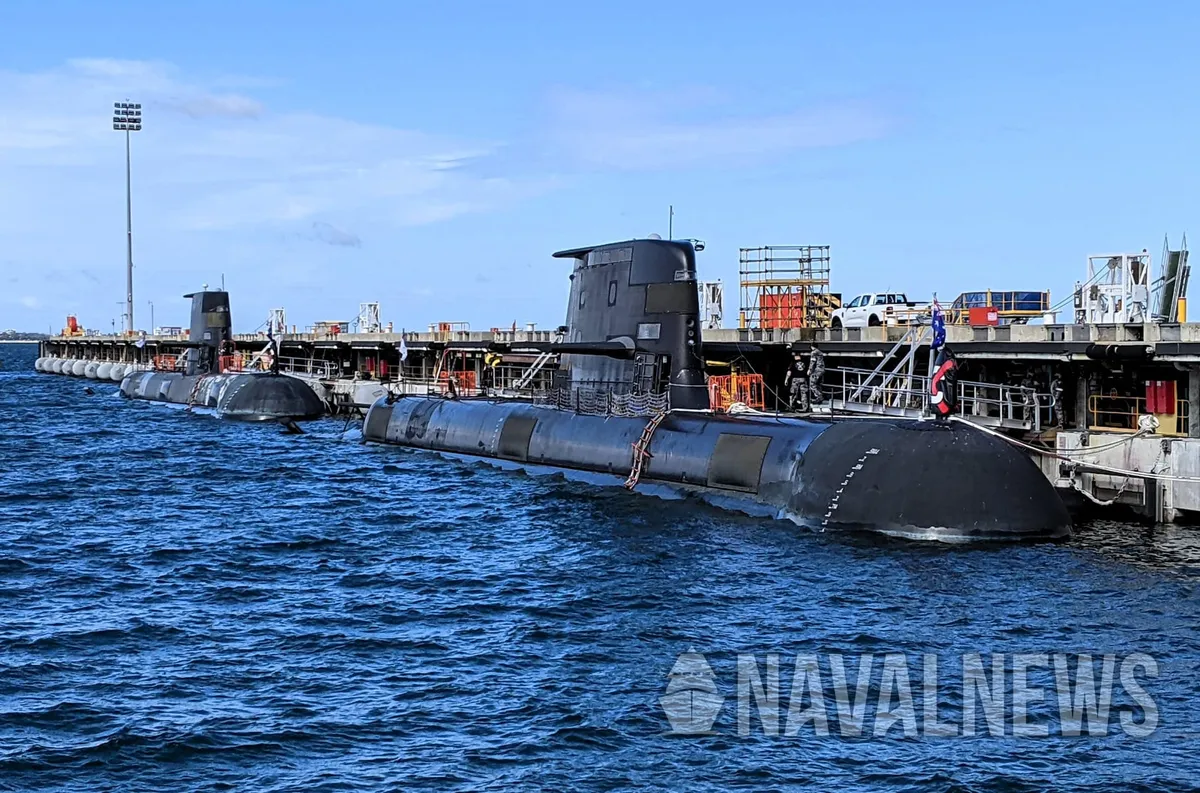
The LOTE decision reveals Australia's submarine industrial base constraint: Attack-class production is not yet ramping fast enough to backfill Collins retirements on schedule.
If the first Attack hull (SSG-01) doesn't commission until 2032-2034 as current timelines suggest, and Collins begins retiring around 2030, Australia faces a 4-6 year gap where it operates below six-boat capacity unless LOTE extends Collins into the mid-2030s.
This creates a procurement sequencing problem for allied submarine operations in the Indo-Pacific: if Australia's attack boat fleet dips to 3-4 operational units during the transition, INDOPACOM loses surge capacity precisely when Taiwan contingency planning assumes full allied submarine availability.
Australia is locking in a decade-long commitment to keep Collins operational past its design life, which directly constrains capital available for accelerated Attack-class procurement and forces DOMO to manage two parallel submarine programs simultaneously.
The A$11B allocation over ten years ($1.1B annually) competes with the Attack-class LRIP funding and creates a schedule risk: if Collins life extension encounters technical delays—corrosion, reactor refurbishment, combat systems obsolescence—the Navy faces either cost overruns that cannibalize Attack-class dollars or operational gaps when Collins retires before Attack hulls arrive.
Watch the FY27-28 Australian Defence Force capability plan for whether Attack-class delivery milestones slip or whether the government commits additional funds to run both programs in parallel.
What is the actual technical scope of the LOTE program—is this primarily hull and reactor refurbishment, or does it include avionics/combat systems upgrades to keep Collins relevant against 2030s threat systems?
Fault Lines
Strategic intelligence, synthesized daily — with a public track record. Every call graded against what actually happened.