Indian Navy Escorts LPG Tankers Through Hormuz as Commercial Shipping Becomes Active Combat Zone
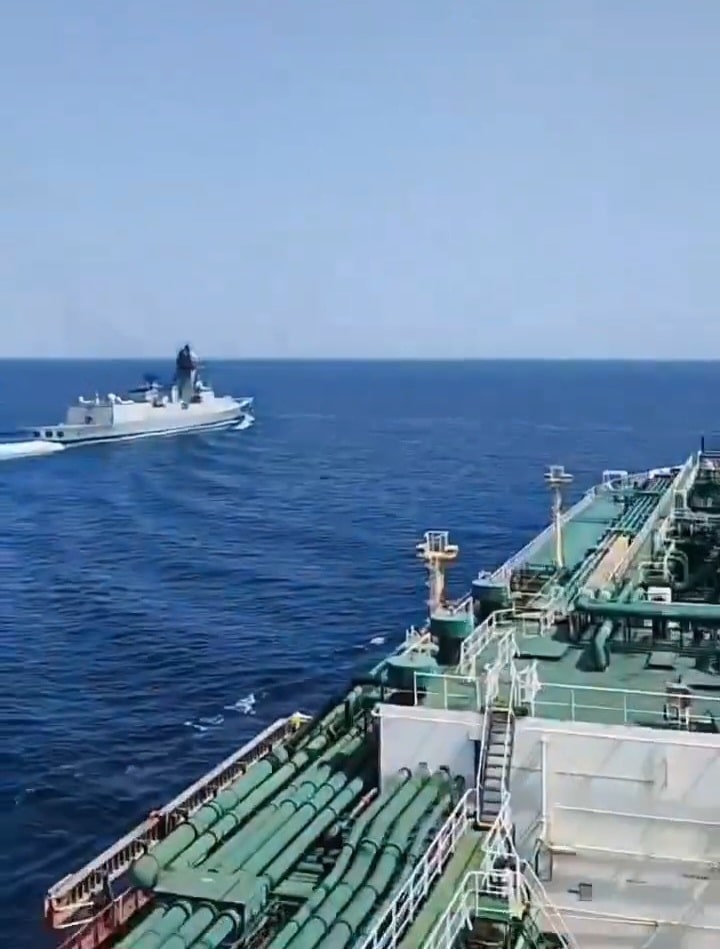
India's escort operation converts Hormuz throughput into a multi-flag naval coordination problem. US Fifth Fleet can no longer assume it controls the chokepoint or can unilaterally protect commerce — allied and non-aligned navies are now making independent force-protection decisions, each raising the risk of blue-on-blue incidents and fragmenting the legal framework for freedom of navigation.
India is now conducting active naval escort operations in a chokepoint where Iranian forces are deliberately targeting commercial vessels.
This signals that non-aligned powers are treating the Strait of Hormuz as an active combat zone and are deploying military assets to protect their energy supply chains — a posture shift from prior de-confliction.
The precedent matters: if Indian escorts become routine, other major importers (Japan, South Korea, EU) will follow, fragmenting the waterway into competing protection zones and raising collision risk between national navies.
India's move also exposes a gap in US Fifth Fleet capacity — with three carrier strike groups committed to the theater (per March 13 signal), the US cannot simultaneously provide convoy protection for non-allied shipping, forcing India and others to self-insure militarily.
The article does not specify whether India coordinated this escort with US Central Command, whether it intends this as a one-off response or a standing operation, or whether other Indian tankers are queued for similar escorts.
Fault Lines
Strategic intelligence, synthesized daily — with a public track record. Every call graded against what actually happened.