Air Force Locks in Five More E-7 Wedgetails Despite Zero FY27 Funding Request
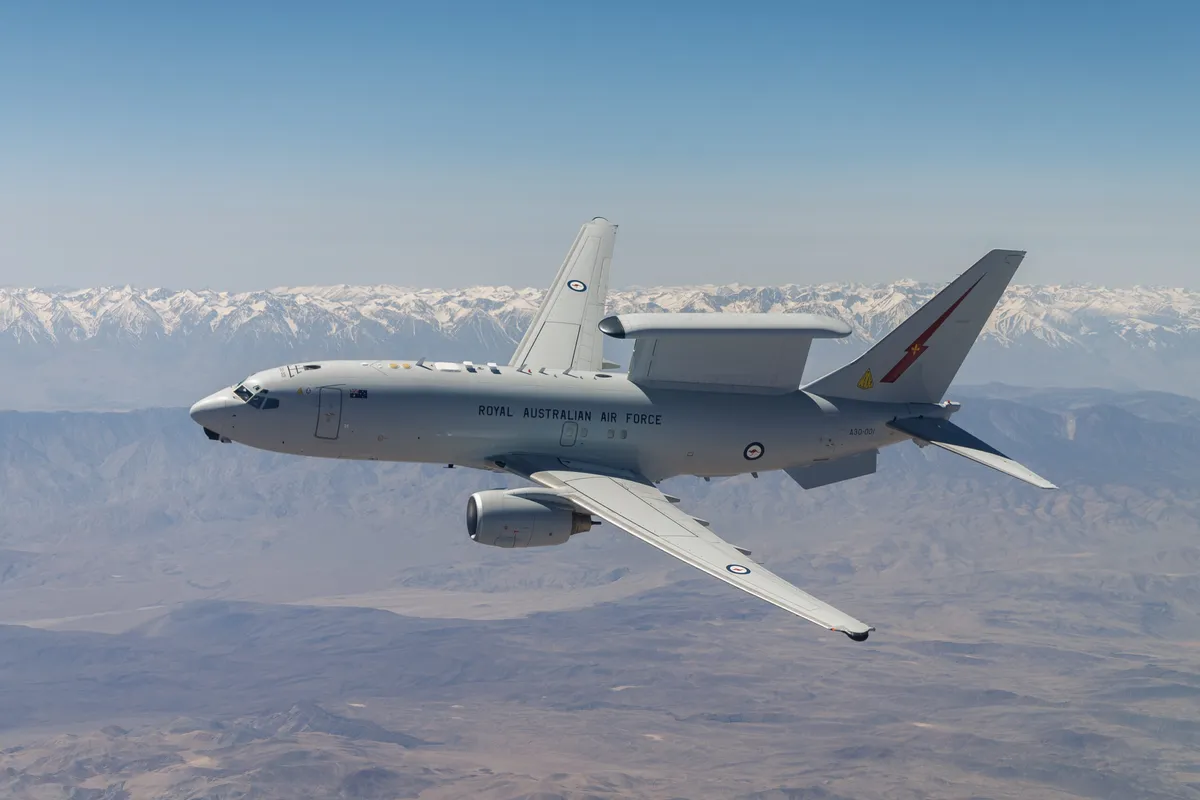
The E-7 procurement decision intersects with the Iran blockade and cruise missile buy already underway. The Air Force's $12B cruise missile program (announced April 29) assumes long-range standoff capability; the E-7 provides the ISR and command architecture to make that doctrine work.
Without additional Wedgetails, the service cannot maintain the 24/7 overwatch footprint required to execute sustained deep-strike campaigns in the Gulf—forcing reliance on satellite ISR alone, which is contested and latency-prone. The five-aircraft commitment, if funded, extends the operational window for high-tempo operations by 18-24 months before fatigue and depot maintenance bottlenecks force a stand-down.
This is a budget shell game masking a real procurement commitment.
The Air Force is contractually bound to five more aircraft but has no appropriated money to pay for them—a classic setup for a Congressional add or a supplemental.
The move signals the service views the E-7 as operationally critical, especially given the Iran conflict context: Wedgetails are force-multipliers in contested airspace, and the current fleet (estimated 6-8 aircraft operationally available) is undersized for sustained operations against distributed threats. If Congress funds these five, the Air Force gains 60+ months of additional ISR/C2 capacity.
If it doesn't, the service faces breach-of-contract liability or must raid other line items. Either way, this forces a FY27 markup conversation the building clearly wanted to avoid in the baseline request.
Why did the Air Force exclude E-7 funding from the baseline request if it had already signed contracts for five more? Was this a deliberate strategy to keep the program below the political visibility threshold, or did budget constraints force the cut and the service is now scrambling to find workaro...
Fault Lines
Strategic intelligence, synthesized daily — with a public track record. Every call graded against what actually happened.