F-22 and MQ-20 Exchange Real-Time Tactical Data in Joint Sorties, Signaling Manned-Unmanned Teaming Maturity
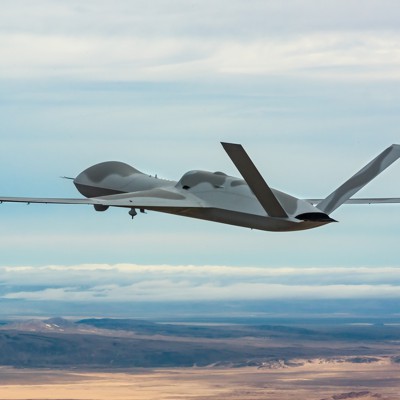
Successful human-drone message exchange in flight reduces technical risk for CCA fielding, which in turn shortens the procurement window for integration contracts with F-22 and F-35 fleets. Northrop and Lockheed will compete for retrofit work on legacy airframes, creating a near-term market for cockpit-to-drone middleware and avionics upgrades.
If the teaming protocol is classified, allied interoperability (Japan, South Korea, Australia) will hinge on NATO/Five Eyes data-sharing agreements, making export control policy a constraint on allied CCA adoption timelines.
This demonstrates that human-drone teaming at the tactical level has moved beyond simulation into live-flight validation.
If the messaging protocol and latency are production-ready, it reduces risk for programs like the Air Force's Collaborative Combat Aircraft (CCA) and accelerates the timeline for deploying autonomous wingmen alongside crewed fighters. The implication for Northrop Grumman (MQ-20 developer) and Lockheed Martin (F-22 prime) is a near-term revenue window for integration and retrofit work across the fleet.
However, a single test article does not confirm operational adoption, sustainment costs, or allied interoperability requirements — all of which will determine whether this scales into a procurement driver.
The article does not specify: (1) which service conducted the test and under what classification; (2) the latency and bandwidth of the message exchange; (3) whether the test included contested RF environments or only line-of-sight scenarios; (4) whether this protocol is compatible with existing Link...
Fault Lines
Strategic intelligence, synthesized daily — with a public track record. Every call graded against what actually happened.