US Navy Establishes Support Base in Western Australia for AUKUS Submarine Rotations
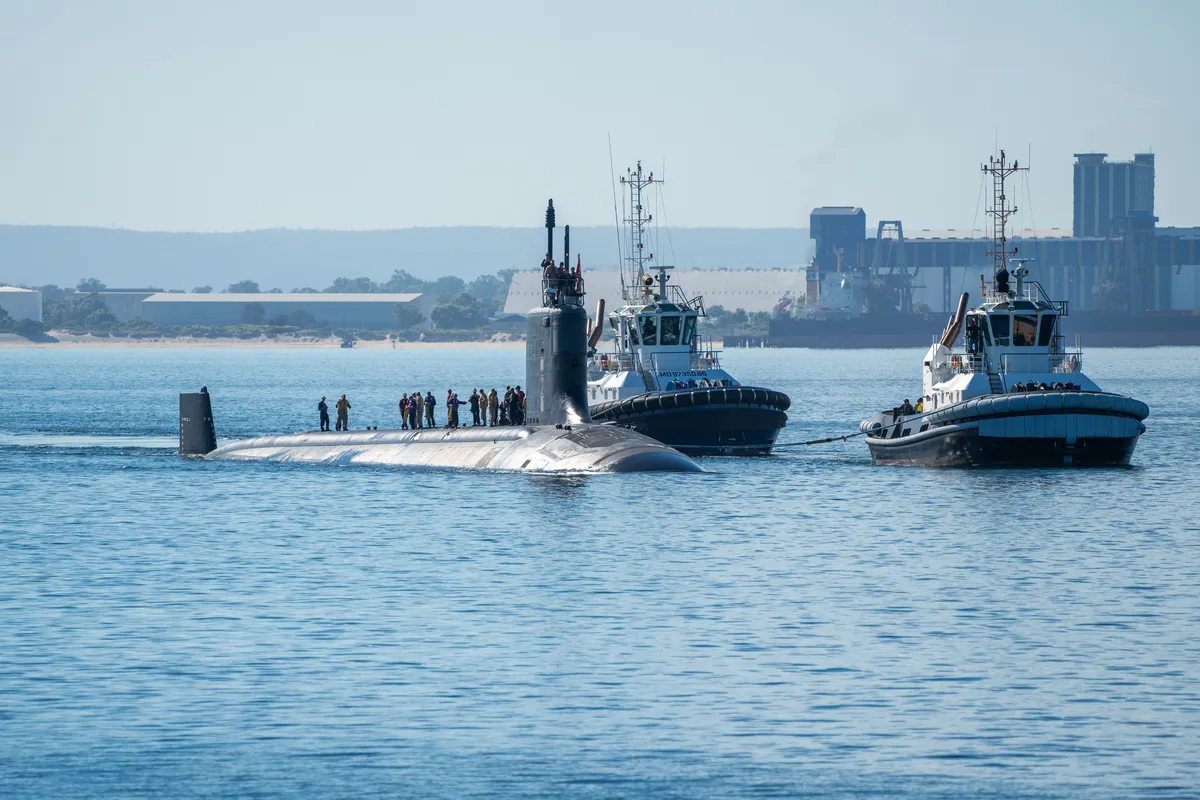
If SRF-W sustains a 2-boat continuous presence (rotating every 12-18 months), that ties up roughly 6-8 Los Angeles or Virginia-class boats in Indo-Pacific tasking, reducing availability for Atlantic and European rotations. This forces a hard choice at STRATCOM: either increase SSN production targets (currently 1.3 per year, insufficient for all commitments) or accept thinner coverage in NATO waters.
Raytheon and Huntington Ingalls will use this to argue for Block V Virginia acceleration in the FY27 budget cycle.
INDOPACOM gains a logistics hub that sustains rotational submarine deployments without triggering the political costs of a permanent US military base in Australia — a constraint that has limited forward posture in the region for decades.
NSA Stirling enables the SRF-W rotation cycle (estimated 12-18 month rotations per hull) by handling crew rotation, maintenance coordination, and supply staging, which means US attack submarines can maintain continuous presence in the Strait of Malacca and South China Sea without the basing negotiations that would require Australian domestic political approval for a permanent installation.
Watch whether Australia's defense budget request for FY27 includes infrastructure funding for Stirling expansion — that will signal whether SRF-W is scaling beyond the current 2-3 boat rotation or staying at token levels.
What is the actual rotation schedule for SRF-W — how many boats per year, and what is the dwell time between rotations? The article doesn't specify whether this supports continuous presence or episodic deployments.
Fault Lines
Strategic intelligence, synthesized daily — with a public track record. Every call graded against what actually happened.