SOCOM Pursues Block III Chinooks While Army Stalls on Block II Fielding
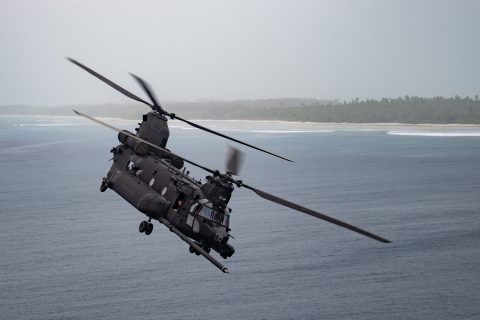
The split procurement creates a production sequencing problem for Boeing Rotorcraft. If SOCOM locks Block III specs while Army continues to defer Block II, Boeing either sustains two separate production lines (cost penalty) or delays Block III to preserve Block II continuity (schedule risk for SOCOM).
The Army's hesitation likely stems from budget constraints or competing modernization priorities — Chinook is not the only heavy-lift requirement. Watch whether SOCOM's Block III interest forces an Army decision earlier than planned, or whether the services end up with incompatible variants that complicate training and logistics.
SOCOM's forward procurement signal while the Army staggers on Block II adoption exposes a capability gap between special operations and conventional forces — and forces Boeing to manage two parallel development tracks with uncertain Army commitment to the intermediate block.
SOCOM controls its own procurement budget and can move independently; the Army, which operates the majority of Chinook fleet, has not committed to Block II scale production, leaving Boeing's production planning fragmented.
If the Army delays Block II LRIP beyond FY27, SOCOM's Block III timeline becomes the only anchor for sustained production rates — but SOCOM's smaller buy volume cannot sustain the industrial base alone.
What is the actual Army timeline for Block II LRIP commitment and initial fielding? Is SOCOM's Block III interest contingent on Army adoption, or are they planning a standalone fleet separate from conventional forces?
Fault Lines
Strategic intelligence, synthesized daily — with a public track record. Every call graded against what actually happened.