Russia Sustains 4,400 Monthly Drone Strikes; UK Intel Flags Acceleration Trend
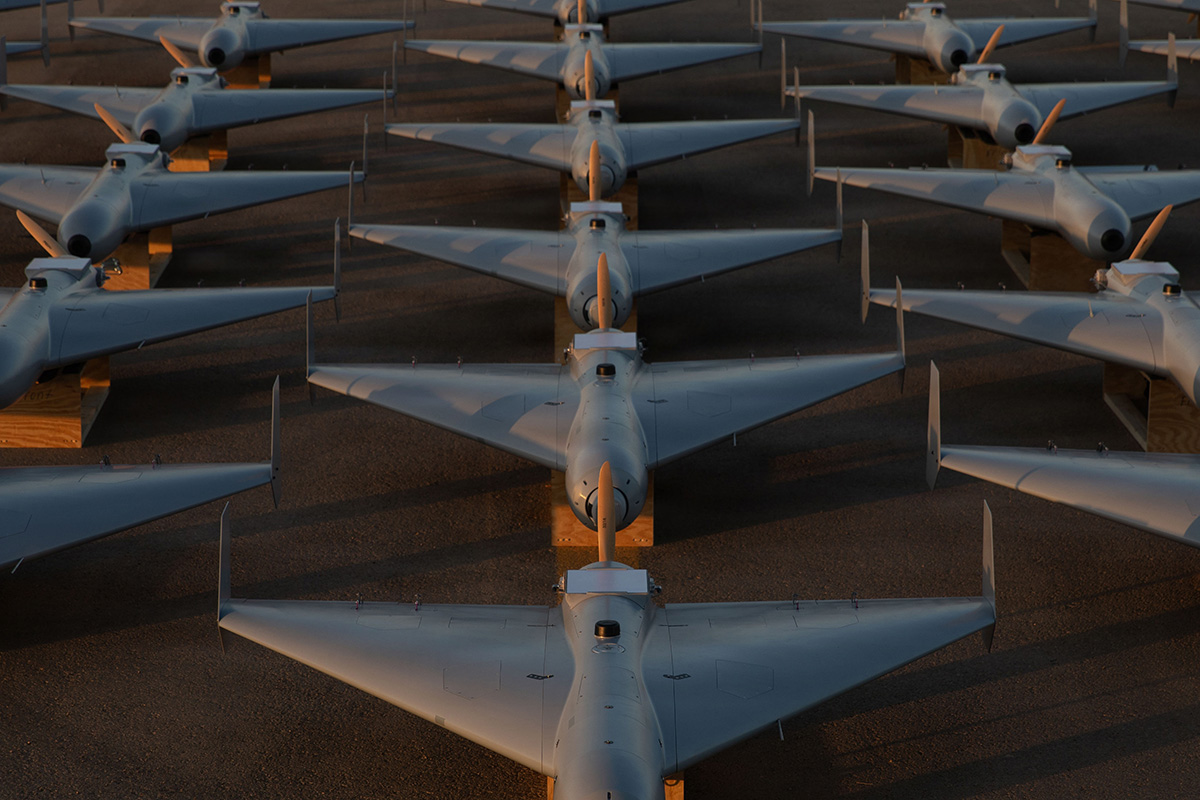
Sustained high-volume drone strikes compress Ukraine's air defense stocks faster than Western production can replenish them, forcing NATO to choose between depleting its own air defense ammunition reserves (delaying NATO contingency readiness) or accepting Ukrainian air defense degradation.
This directly constrains Power Projection planning: if NATO allies commit Patriot or IRIS-T rounds to Ukraine faster than industrial base output, European air defense inventories for territorial defense or NATO exercises fall below planning assumptions, triggering either emergency procurement (cost shock to FY27 budgets) or capability trade-offs in other theaters.
A sustained monthly rate of 4,400 strikes indicates Russia has achieved industrial-scale drone production and deployment despite sanctions and attrition.
This matters to procurement planners because it demonstrates that attrition-based degradation strategies (destroying drones faster than Russia replaces them) have not yet compressed Russia's launch capacity.
For Ukraine's air defense suppliers — particularly those providing medium-range systems like IRIS-T, Patriot, and Gepard — this signals sustained demand through 2026 and pressure to accelerate production or secure additional tranches.
Critically, the article does not distinguish between loitering munitions (which require precision targeting and cost $20K–$50K per unit) and cheaper one-way attack drones (potentially $5K–$15K), so the actual production burden and Russia's resource drain remain unclear.
If January 2026 represents a new baseline rather than a spike, it will force NATO allies to reassess air defense inventory sufficiency for potential contingencies elsewhere (NATO territory, Taiwan scenarios).
The article does not break down the 4,400 figure by drone type, cost per unit, or production source — critical for assessing whether this reflects a step-change in Russian manufacturing capacity or merely sustained attrition rates.
Fault Lines
Strategic intelligence, synthesized daily — with a public track record. Every call graded against what actually happened.