Khamenei Death Exposes Russia's Iran Exposure; Moscow Loses Leverage Without Hardline Ally
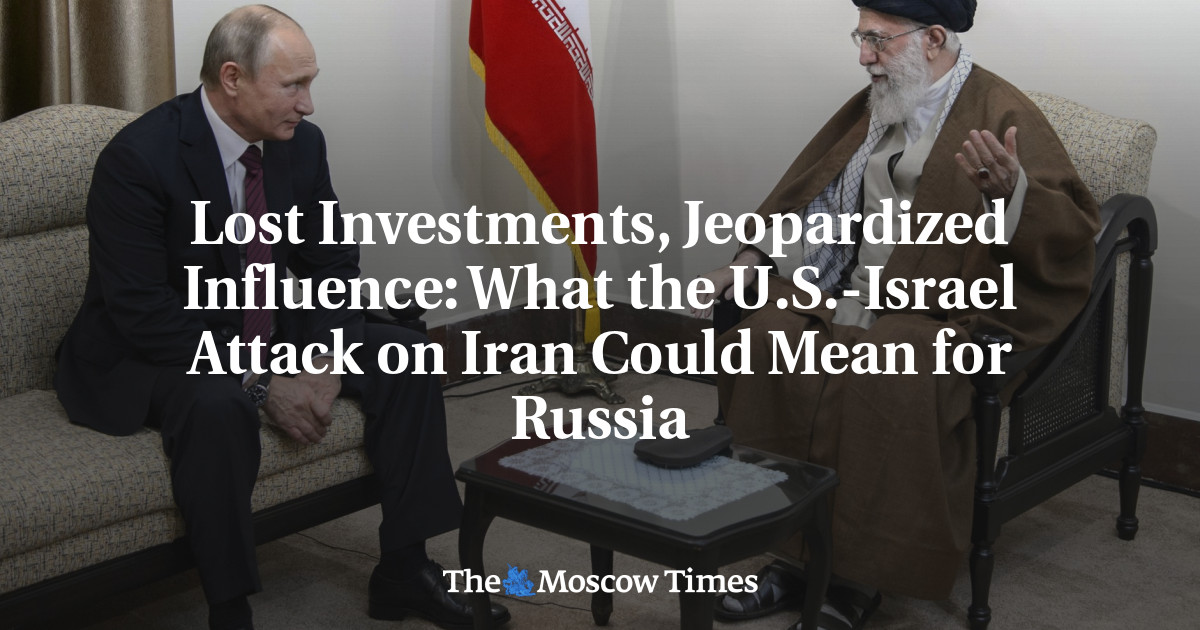
If a post-Khamenei Iran moves toward sanctions relief and Western engagement, Russian defense primes (Rosoboronexport, Almaz-Antey) lose a captive customer for air defense and drone systems currently shielded from Western competition by sanctions.
Simultaneously, if Iran normalizes with the West, U.S. and allied defense contractors gain market access to Iranian modernization—a zero-sum shift in regional procurement that also reduces Russia's ability to leverage Iranian military dependency as a geopolitical asset in Syria, Iraq, and the Gulf.
If Iran's post-Khamenei government moderates its stance toward the West—particularly the U.S. and Israel—Russia loses a critical regional counterweight to American influence and a partner willing to absorb Western sanctions pressure.
This matters for defense investors because it reshapes the Middle East balance-of-power calculation that has underpinned Russian military sales, energy leverage, and intelligence partnerships in the region over the past decade.
However, the article provides no quantified data on the scale of Russian investments in Iran, no breakdown of military vs. civilian exposure, and no timeline for how quickly a political transition might alter Iran's foreign policy vector. Without those specifics, the claim remains a broad geopolitical assertion rather than a measurable business or strategic risk.
What specific Russian military contracts, energy deals, or technology partnerships are at risk? What is the estimated financial exposure? Does the article's premise assume a near-term Iran-West rapprochement, or is it addressing medium-term strategic realignment? The source does not clarify.
Fault Lines
Strategic intelligence, synthesized daily — with a public track record. Every call graded against what actually happened.