DARPA's X-68A LongShot Enters Flight Test, Extending Air-to-Air Combat Range
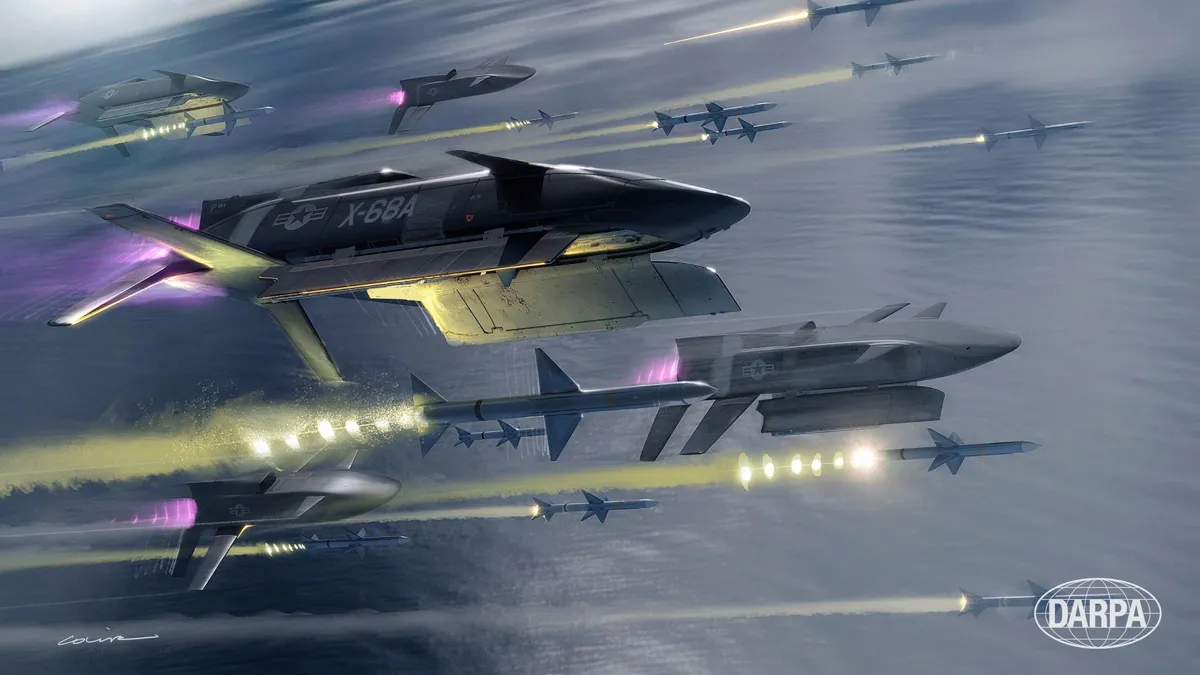
LongShot's integration into fighter platforms directly competes for fuselage hardpoints and weight budgets against traditional air-to-air missiles, forcing F-35 and F-15EX sustainment contracts to include new pylon/separation systems.
This shifts capital allocation within the air-to-air weapons industrial base: companies like Raytheon (AIM-120/AIM-9X) and Lockheed (integration engineering) either bid into the LongShot supply chain or defend legacy missile production by arguing against platform modification costs.
LongShot represents a shift in air combat doctrine from fighter-centric to distributed munitions delivery.
If flight testing confirms the design, it forces two procurement decisions: (1) which fighter platforms (F-22, F-35, F-15EX) will integrate the launch capability, and (2) whether this accelerates retirement of legacy air-to-air missile inventories or extends their operational life by shifting them to drone platforms.
General Atomics gains a new revenue stream in air-launched platforms; competitors (Northrop, Raytheon) must evaluate whether their existing air-to-air missile portfolios face demand compression or channel shift. The operational implication hinges on actual flight test results and Air Force integration timelines—neither is confirmed in this announcement.
The article does not specify which fighter platforms will be modified to launch LongShot, the estimated cost of integration, the number of munitions the drone can carry, or the expected operational range compared to existing air-to-air systems.
Fault Lines
Strategic intelligence, synthesized daily — with a public track record. Every call graded against what actually happened.