UK signals Challenger 3 export momentum but withholds buyer details
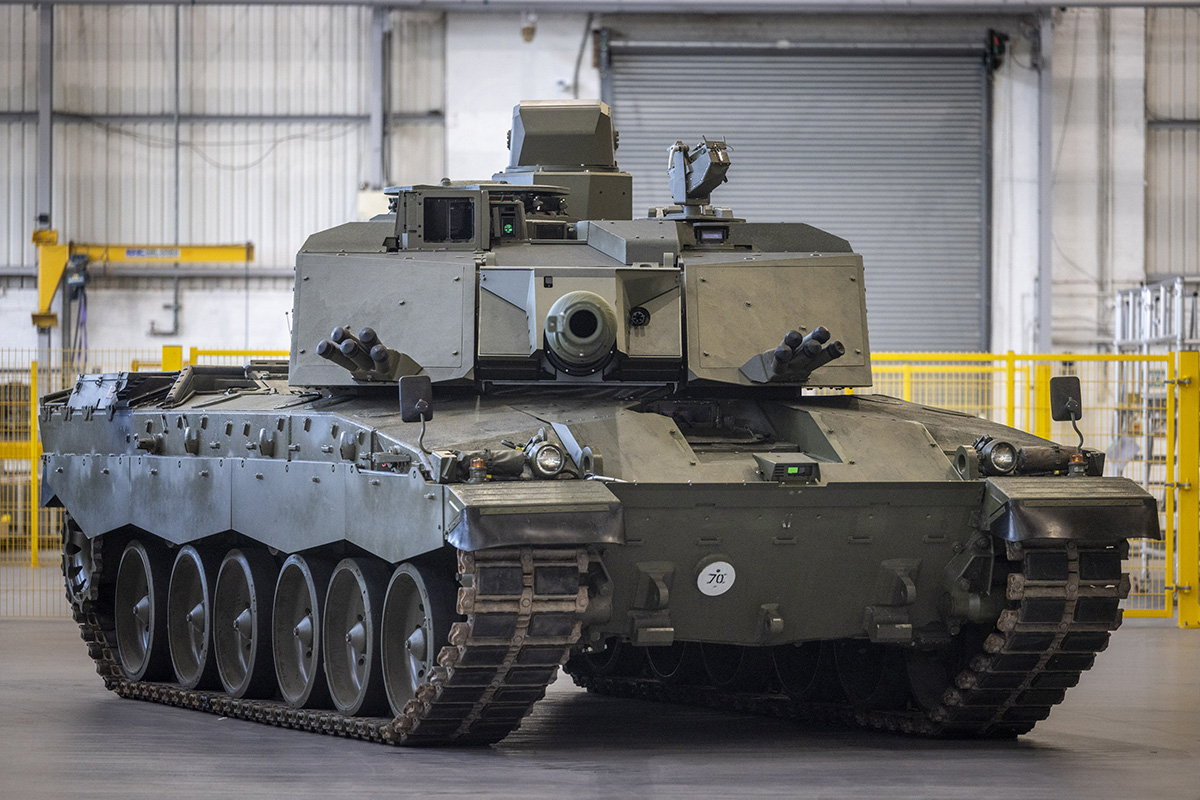
Dual-pillar: Market Forces — BAE Systems' defense export revenue and production capacity utilization depend on Challenger 3 sales volume and timing. Power Projection — export authorization reflects UK strategy to strengthen allied armor capability (NATO eastern flank) or deepen relationships with strategic partners (Gulf, Turkey).
The connection between pillars is direct but contingent: only if buyers are NATO members or U.S.-aligned does this reinforce the Western alliance; if buyers include non-aligned states, it signals UK independent export strategy diverging from U.S. ITAR constraints.
Export authorization for Challenger 3 directly affects BAE Systems' revenue and production planning, and signals UK willingness to export a peer-competitor main battle tank to non-NATO or contested allies.
The lack of detail prevents assessment of which geopolitical relationships are being leveraged—whether this targets NATO interoperability (Poland, Romania) or extends to non-aligned states (Turkey, Gulf monarchies). Until buyer identities and quantities emerge, investors cannot gauge market size or regulatory risk (export controls, parliamentary scrutiny).
The vagueness itself is noteworthy: it suggests either early-stage talks or deliberate opacity to avoid antagonizing Russia or China before deals close.
Which countries are in active negotiations, what quantities are under discussion, and what export licensing hurdles remain?
Fault Lines
Strategic intelligence, synthesized daily — with a public track record. Every call graded against what actually happened.