A-10 Warthogs Deploy Middle East Modifications: Refueling Probe and EW Pod Additions
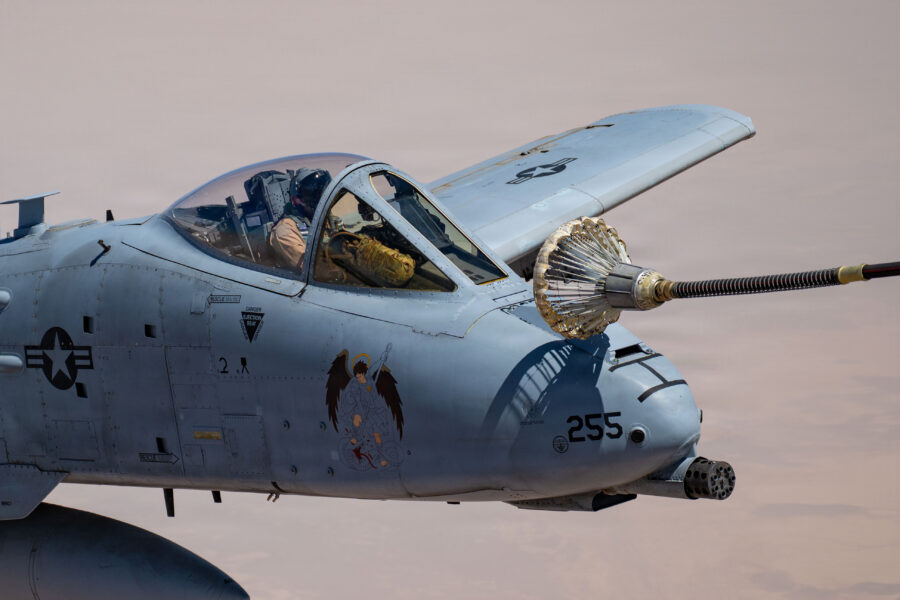
The timing suggests response to operational gaps exposed by the May ceasefire collapse. If Iran's restart of drone production (confirmed by US intelligence in early May) is accelerating, A-10s with unrefueled combat radius will become increasingly vulnerable on extended Hormuz patrols.
The EW pod retrofit also implies CENTCOM assessed that existing A-10 self-defense suites — AGM-65 Mavericks and 30mm gun — are insufficient against the Iranian layered air-defense posture. If these modifications prove effective, expect pressure to accelerate similar upgrades to the F-16 fleet, which faces the same range and survivability constraints.
The refueling probe extends A-10 combat radius by an estimated 150-200 nm per sortie, directly enabling the aircraft to conduct longer escort rotations over the Strait of Hormuz without requiring forward fuel caches or additional tanker support — a constraint that has pinched CENTCOM's loitering-attack capacity since Iranian drone production restarted in April.
The EW pod upgrade (likely an ALQ-131 or similar) hardens the A-10 against the Iranian air-defense network that downed multiple ISR platforms in 2025, reducing attrition risk on low-altitude CAS missions. Watch whether these modifications are retrofit-only or precursor to a formal A-10 Mid-Life Upgrade directive — if the latter, expect a $400M+ sustainment line in the FY27 FYDP.
Are these modifications being applied across the entire Middle East A-10 fleet, or only to forward-deployed squadrons at Al Dhafra and Al Udeid?
Fault Lines
Strategic intelligence, synthesized daily — with a public track record. Every call graded against what actually happened.