Japan Deploys 1,400 Troops, Type 88 Missiles to Balikatan as First Active Participant
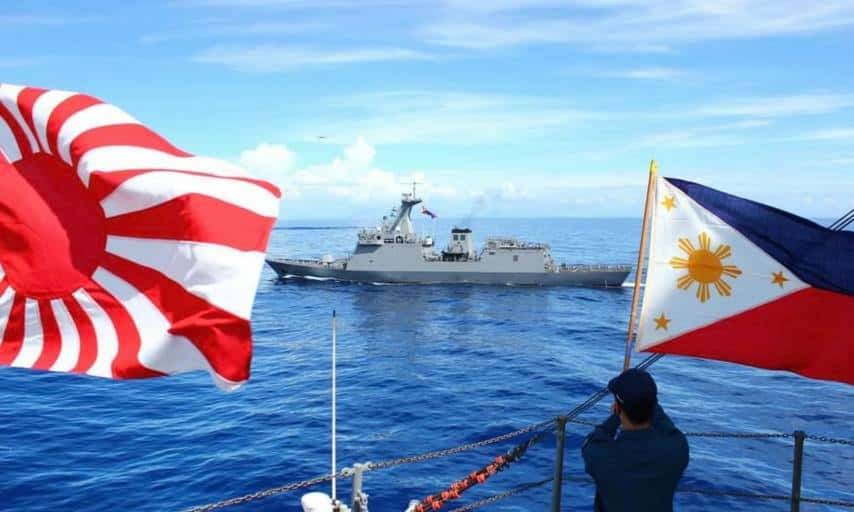
Japan's Type 88 missile deployment to the Philippines creates a new anti-ship targeting layer in the South China Sea that complicates Chinese carrier operations and forces Beijing to expand air-defense perimeter planning.
Simultaneously, Japan's commitment of 1,400 combat troops to forward exercises reduces its immediate availability for Taiwan-contingency rotations—a tradeoff that only makes sense if Tokyo judges the Philippines corridor (and by extension, US Navy freedom of maneuver in the region) as the binding constraint on deterrence.
This suggests Japan is betting that securing the South China Sea supply routes is prerequisite to defending Taiwan, rather than treating them as separate problems.
Japan's first active participation in Balikatan—including live-fire missile deployment—operationalizes the US-Japan-Philippines trilateral security architecture during an active US-Iran blockade and amid Chinese pressure in the South China Sea.
This commits Japanese air-defense and anti-ship capability to a forward posture in the Western Pacific, reducing flexibility for regional contingencies and signaling to Beijing that Japan views the Philippines as a defended ally.
The timing locks Japan into an extended exercise cycle precisely when the Hormuz blockade is consuming US Navy capacity and forcing allied militaries to plan for prolonged energy disruption (per South Korea's April 14 emergency activation)—suggesting Japan is hedging against both Iran-related energy shocks and Chinese coercion by deepening operational integration with the US-Philippines axis.
The article does not specify the exercise duration, whether the Type 88 deployment is permanent or rotational, or whether Japan has committed to forward-based logistics support for sustained operations in the Philippines—all material to understanding whether this is a one-time show of solidarity or...
Fault Lines
Strategic intelligence, synthesized daily — with a public track record. Every call graded against what actually happened.