Indonesia's First Two Scorpene Evolved Subs Confirmed for Cruise Missile Capability
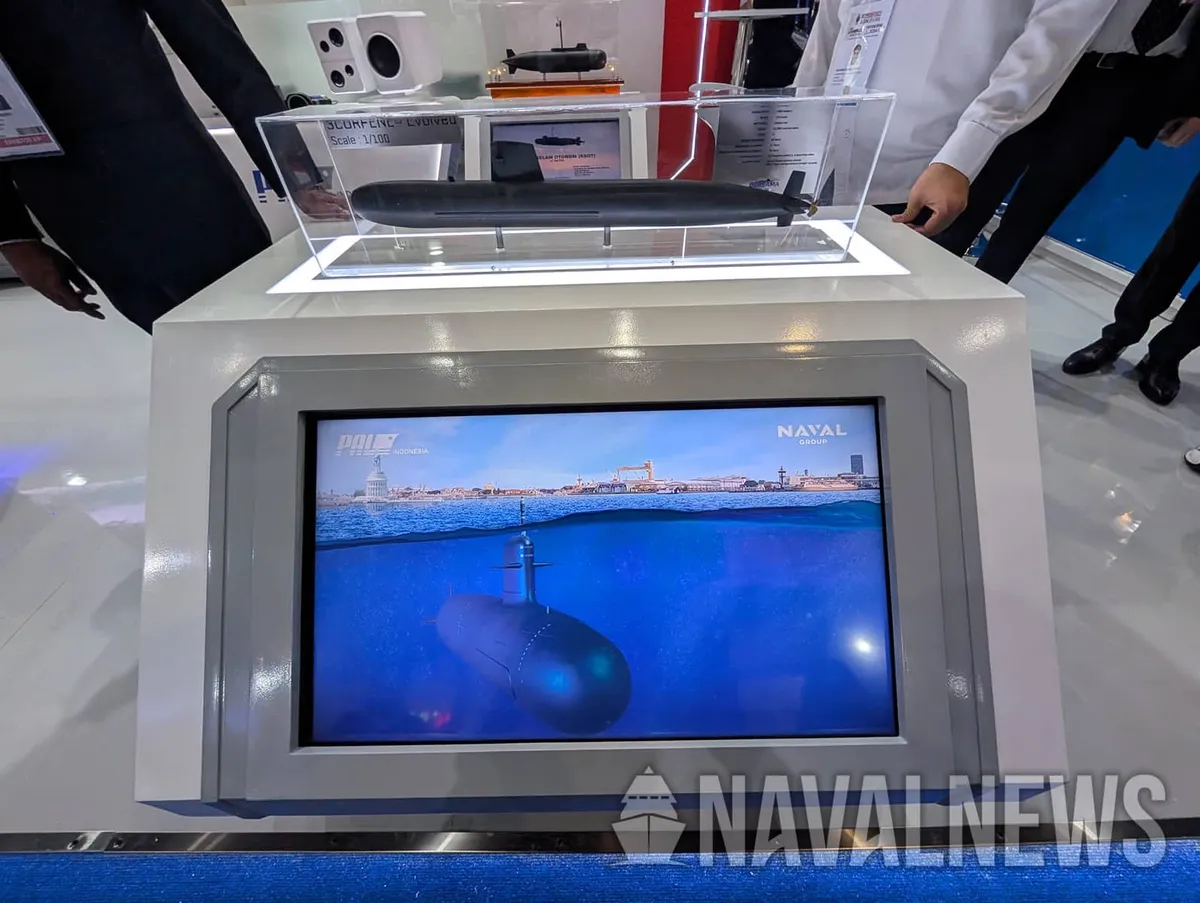
If the missile integration is confirmed and PT PAL executes on schedule, Indonesia acquires a submarine-launched strike capability 2-3 years ahead of what a retrofit-later approach would deliver. That compresses the window for regional competitors (Vietnam, Philippines) to acquire similar standoff range and forces INDOPACOM planners to treat the Scorpene class as a peer-competitive platform sooner than expected.
However, PT PAL's track record on complex integration is unproven — the first-of-class Nagapasa took 15+ years from contract to commissioning, and this is the first domestically-built submarine with integrated cruise missile capability for Indonesia. Schedule risk is real.
This resolves a procurement ambiguity that directly affects the operational calculus for INDOPACOM's southern flank.
Indonesia's TNI AL now has confirmed anti-ship and land-attack range from the outset of the class, not as a retrofit or later-block upgrade. That changes the timeline for regional power projection — PT PAL must validate fire-control integration and missile interfaces on the first hull, compressing the test envelope and increasing risk of schedule slip.
Watch whether Thales (the combat system integrator) has already released the missile-ready software baseline, or whether this confirmation is aspirational ahead of actual integration work.
What is the specific cruise missile type confirmed for these boats — Exocet, Tomahawk, or a domestic/regional alternative? The article doesn't name the weapon system, which matters for understanding the capability ceiling and supply chain dependencies.
Fault Lines
Strategic intelligence, synthesized daily — with a public track record. Every call graded against what actually happened.