Air Force Doubles F-15EX Buy to 267 Aircraft; Signals Shift Away from Fifth-Gen Fighter Dominance
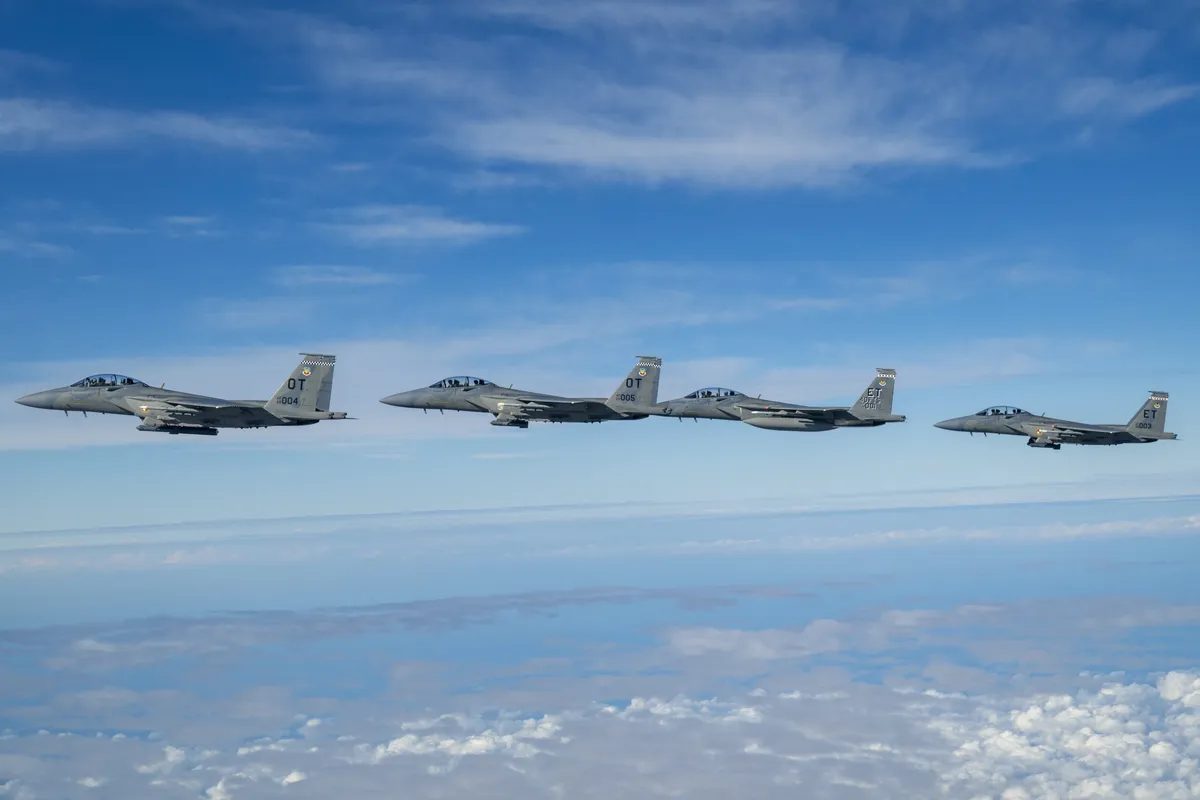
The F-15EX expansion directly competes with F-35 sustainment and pilot training pipeline capacity. If the Air Force accelerates F-15EX production to hit 267 aircraft by 2032, it must pull instructor pilots and maintenance technicians away from F-35 squadrons, delaying the retirement of aging F-16s and extending the operational lifespan of aircraft already past their design service life.
This extends the readiness window for Pacific Command contingency planning but introduces a new industrial bottleneck: Boeing's St. Louis line cannot simultaneously produce 267 F-15EXs AND support existing F-15E/SG sustainment for allies without a major capital expansion.
This is a procurement signal, not a capability signal.
The Air Force is betting that a larger fleet of mature, lower-cost aircraft can absorb surge demand and attrition better than waiting for F-35 production to scale. Boeing wins a $30B+ contract extension; Lockheed's F-35 production pressure eases slightly but sustainment revenue stays flat.
The real problem: doubling F-15EX production requires machine tools, supply chain capacity, and pilot training slots that don't exist yet. This announcement without a corresponding industrial base investment plan is a political statement, not an executable commitment.
If the Air Force actually buys 267 F-15EXs, it's admitting the F-35 program cannot deliver the promised fleet size on schedule—and that admission cascades into allied procurement decisions (Japan, South Korea, Poland all have F-35 commitments on the books).
Does this 267-aircraft target have a funded FYDP line item, or is it a wish list ahead of FY27 budget reconciliation? And what triggers the decision to actually award the second tranche—a specific production rate, a Taiwan contingency trigger, or just Congressional pressure?
Fault Lines
Strategic intelligence, synthesized daily — with a public track record. Every call graded against what actually happened.