Army UAS Operator Competition Shapes Recruitment and Training Pipeline for Drone Pilots
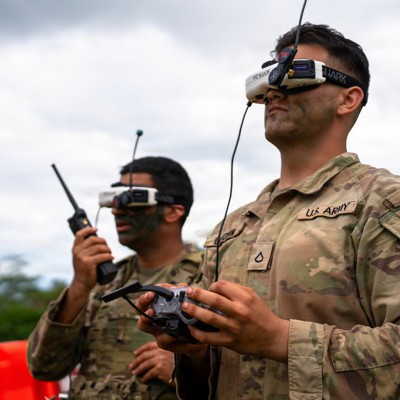
Formalizing UAS operator selection through a competitive event creates a bottleneck that can either accelerate or constrain drone force expansion depending on how selection outcomes feed into assignment priorities.
If high-performing operators are concentrated in contested-environment units (Pacific Command, European Command), the Army must either replicate the training standard across all commands or accept that lower-tier units operate with less-qualified pilots — a trade-off that directly affects readiness calculations in force planning.
Alternatively, if the competition becomes a ticket to higher pay or faster promotion, it may pull talent away from sustained operations into preparation cycles, creating a retention and continuity problem.
This signals the Army is formalizing operator recruitment and standardization at a time when drone operations have become routine across all echelons but pilot training remains fragmented across units and platforms.
If the competition becomes a gating mechanism for advancement or assignment to high-demand units, it could accelerate consolidation of UAS training under a single doctrine and reduce the skill variance that has plagued interoperability across Army, Navy, and Joint operations.
The immediate beneficiary is whichever training contractor wins the curriculum design contract; the constraint is whether this actually changes pipeline throughput or merely certifies existing operators retroactively.
The article does not specify: (1) whether this is a one-time event or recurring selection cycle; (2) how many operators are expected to compete or be selected; (3) which defense contractors are involved in curriculum design or training delivery; (4) whether selection affects promotion, unit assignme...
Fault Lines
Strategic intelligence, synthesized daily — with a public track record. Every call graded against what actually happened.