A-10 Fleet Doubling in Middle East as Close-Air-Support Demand Surges in Iran Campaign
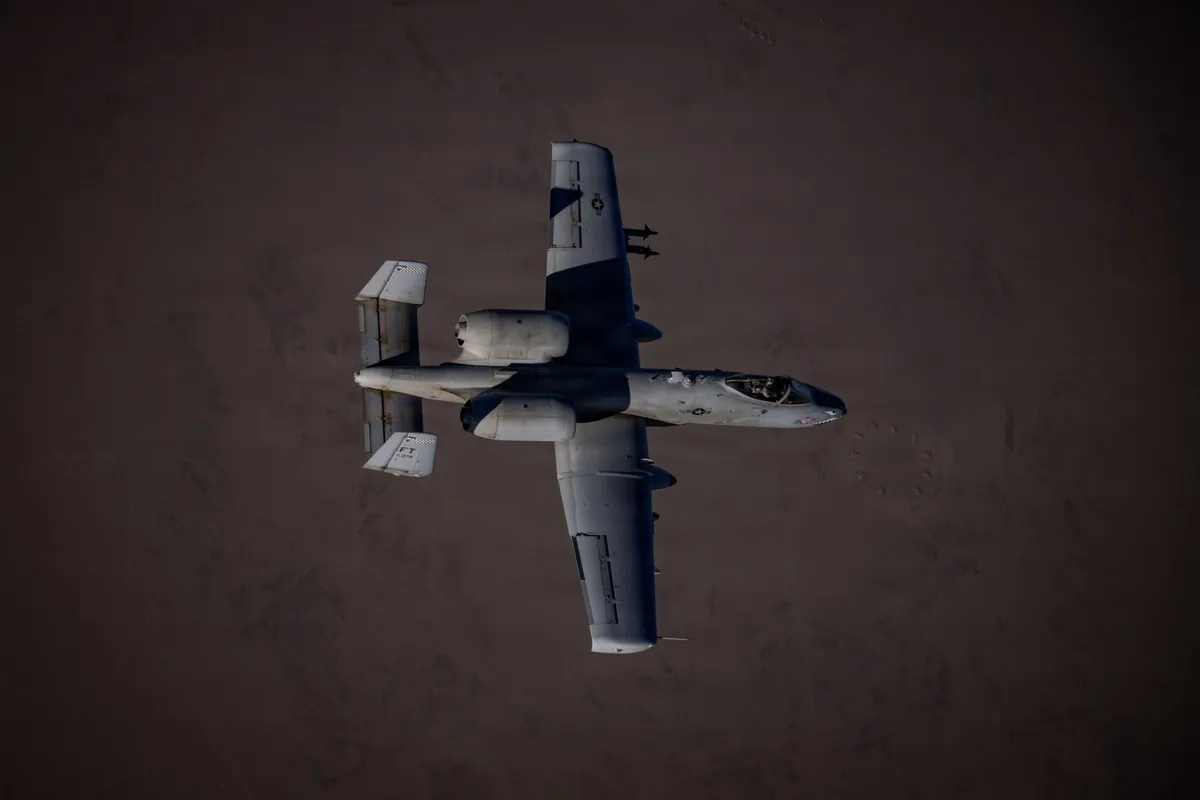
A-10 doubling reduces the operational ceiling on ground operations. These aircraft require short-range basing (Iraq, Kuwait, potentially UAE) and cannot operate effectively against intact air defenses; their deployment signals confidence in air-superiority maintenance and preparation for prolonged militia-suppression missions that precede or accompany ground force insertion.
This directly enables the 82nd Airborne and 31st MEU operations already underway, compressing the timeline between air campaign and ground contingency.
A-10 doubling signals sustained ground-combat operations and militia suppression as the primary near-term mission, not just air-to-air or strategic strikes.
This reflects operational planning for extended presence in Iraq and the Levant rather than a short strike campaign. The commitment of low-altitude CAS assets also indicates expectation of degraded Iranian air defenses after the E-3 loss and bunker-buster strikes on Isfahan — if Tehran retained credible short-range air defense, doubling A-10s would increase attrition risk unacceptably.
Watch whether this precedes amphibious or airborne ground insertions: the 82nd Airborne and USS Tripoli ARG are already positioned, and CAS expansion typically arrives 1-2 weeks before major ground operations commence.
The article does not state: current A-10 inventory in theater, specific units being redeployed, timeline for arrival, or whether this is a sustained rotation or a one-time surge. Without baseline numbers, 'doubling' is unquantifiable for readiness planning.
Fault Lines
Strategic intelligence, synthesized daily — with a public track record. Every call graded against what actually happened.