Syria's Sharaa Declares Neutrality in Iran Conflict; Third-Country Spillover Risk Contained—For Now
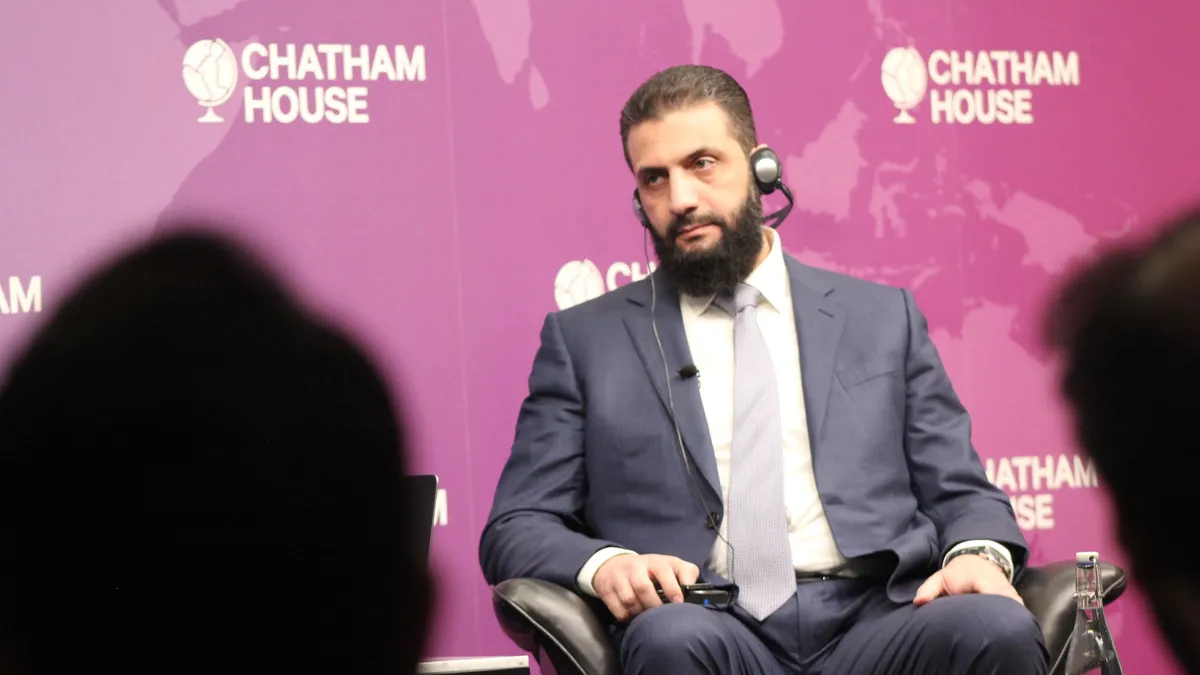
Syria's declared neutrality removes one potential escalation vector but does not eliminate the geographic constraint. If US or Israeli strikes on Iranian nuclear or ballistic sites require overflight of Syrian airspace (as some Isfahan-area targets likely do), Sharaa's tolerance for 'passage' versus 'strikes' becomes a operational decision point.
Separately, Hezbollah's activation of the northern front (per prior signal) now operates in a theater where Syria controls airspace and border security—Syria's refusal to interdict Hezbollah logistics could become a proxy measure of how much Sharaa's neutrality actually constrains Iranian-aligned forces.
This is a deliberate de-escalation signal from a state that could otherwise serve as a conduit for Iranian retaliation or a secondary theater.
Sharaa's public declaration—made at a Western think tank, not through Iranian channels—suggests Syria's new government (post-2024 transition) is prioritizing reconstruction and avoiding entanglement in state-on-state conflict. The constraint: his pledge holds only if Israel and the US honor the implicit boundary.
Given that Iraqi infrastructure has already been struck (per prior signals), and that Hezbollah has opened a northern front, the risk of accidental or deliberate Syrian involvement remains real.
If Israel or the US targets Iranian assets transiting Syrian airspace or strikes Iranian proxies on Syrian soil, Sharaa's neutrality pledge becomes void—and Syria's air defenses and geography would immediately become operational factors in the conflict.
The article does not specify what threshold Sharaa defines as 'targeted'—whether this includes airspace violations, strikes on Iranian assets within Syria, or only direct strikes on Syrian military/civilian targets.
Fault Lines
Strategic intelligence, synthesized daily — with a public track record. Every call graded against what actually happened.