Ukraine Orders 8,000 Octopus Interceptor Drones; Signals Shift to Attrition-Based Air Defense
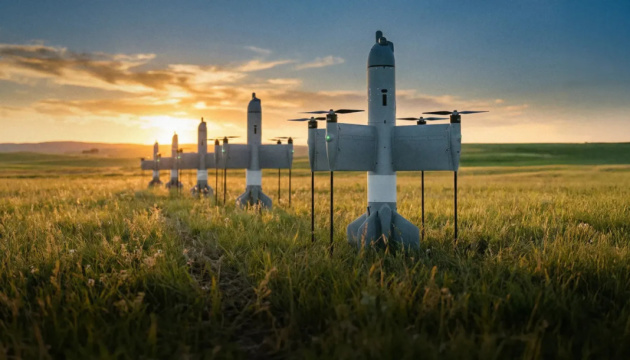
Ukraine's shift to drone-swarm air defense directly enables the deep-strike campaign Zelensky announced 24 hours earlier. Orsk refinery attacks and other rear-area operations require suppression of Russian air defenses and air superiority denial — missions that deplete manned aircraft and SAM inventory. Octopus drones absorb that attrition, keeping the AFU's scarce fighter squadrons alive for offensive missions.
Simultaneously, this procurement exposes Ukraine's dependence on foreign industrial capacity — the drones must come from allied production (likely Poland, Slovakia, or third-party manufacturers), tying Ukrainian operational tempo to allied supply chains rather than domestic manufacture. This creates a leverage point for Western allies in shaping Ukraine's campaign strategy.
This is a supply-side acknowledgment that Ukraine cannot sustain attrition against Russian air superiority through manned aircraft or traditional air defense systems alone.
The Octopus — a cheap, expendable interceptor — signals acceptance that the AFU will trade volume for cost in the air defense mission. At scale, 8,000 units suggests Ukraine expects to lose hundreds per month to Russian air operations and is budgeting for continuous replacement.
The procurement timing, amid Zelensky's April 29 announcement prioritizing deep strikes on Russian rear infrastructure, reveals a two-front air campaign: offensive strikes deep into Russian territory require air cover, and that cover now comes from drone swarms rather than conventional systems.
This reshapes the cost structure of the air war — if Octopus units cost $20K-50K each (industry estimates for loitering munitions), the total program runs $160M-400M, a fraction of what equivalent SAM batteries would cost but requiring industrial capacity Ukraine doesn't control domestically.
Is the 8,000-unit figure a single procurement tranche or a multi-year program? Delivery schedule matters enormously — if these arrive over 24 months, Ukraine is managing attrition; if compressed into 6-9 months, it signals expectation of a near-term air offensive or defensive crisis.
Fault Lines
Strategic intelligence, synthesized daily — with a public track record. Every call graded against what actually happened.