Air Force Advances Palletized Cruise Missile System for Cargo Aircraft; 2027 Fielding Target Set
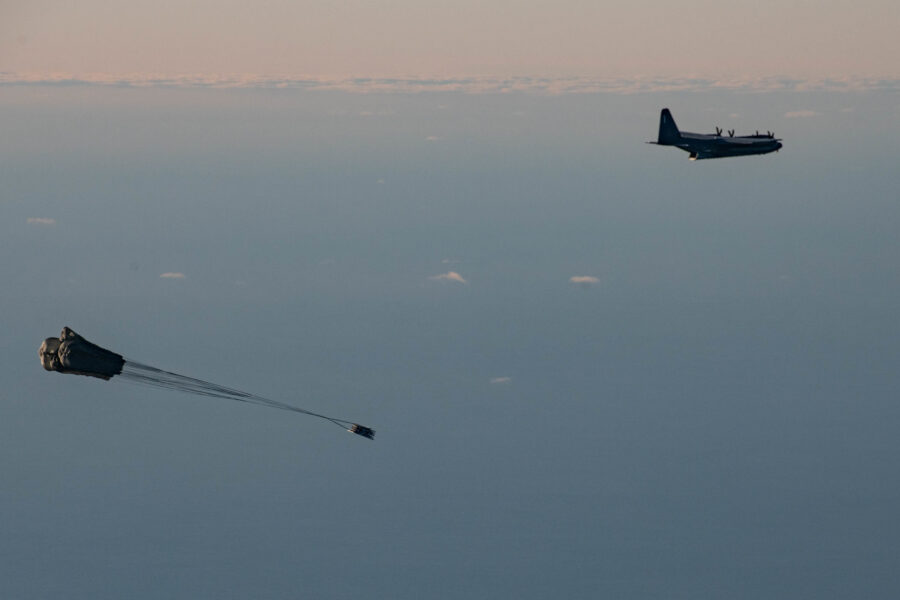
If the system uses JASSM or LRASM, Lockheed Martin's production line faces immediate surge demand—palletized cargo launches multiply the number of platforms that can carry cruise missiles, shifting from a handful of B-52s and B-1s to dozens of transport aircraft.
Raytheon's JASSM production is already constrained by the Hormuz escort rotation demand (reflected in the prior Maersk cost signal and Saudi airbase denial). A palletized system that reaches IOC in 2027 forces a production choice: accelerate JASSM output to fill both platforms, or ration inventory between bombers and cargo aircraft.
This signals the Air Force is committing to a distributed strike architecture that bypasses traditional bomber constraints—specifically, the C-130 and C-17 fleets become surge strike assets without requiring new airframes or dedicated weapons platforms.
The 2027 fielding timeline locks this into the FY27-28 FYDP, which means procurement decisions on integration kits, software certification, and initial load-outs must clear by Q4 2026. Watch whether this competes for funding against B-21 sustainment or NGAD development—all three are in the same budget line and the Air Force has not publicly weighted their priorities.
What is the actual missile load-out per aircraft platform (C-130 vs. C-17), and does the Air Force intend to field this with existing cruise missile inventory (JASSM, LRASM) or develop a new variant? The article does not specify.
Fault Lines
Strategic intelligence, synthesized daily — with a public track record. Every call graded against what actually happened.