Taiwan Chip Supply Halts if Hormuz Blockade Holds; LNG and Helium Imports Face 30-60 Day Depletion
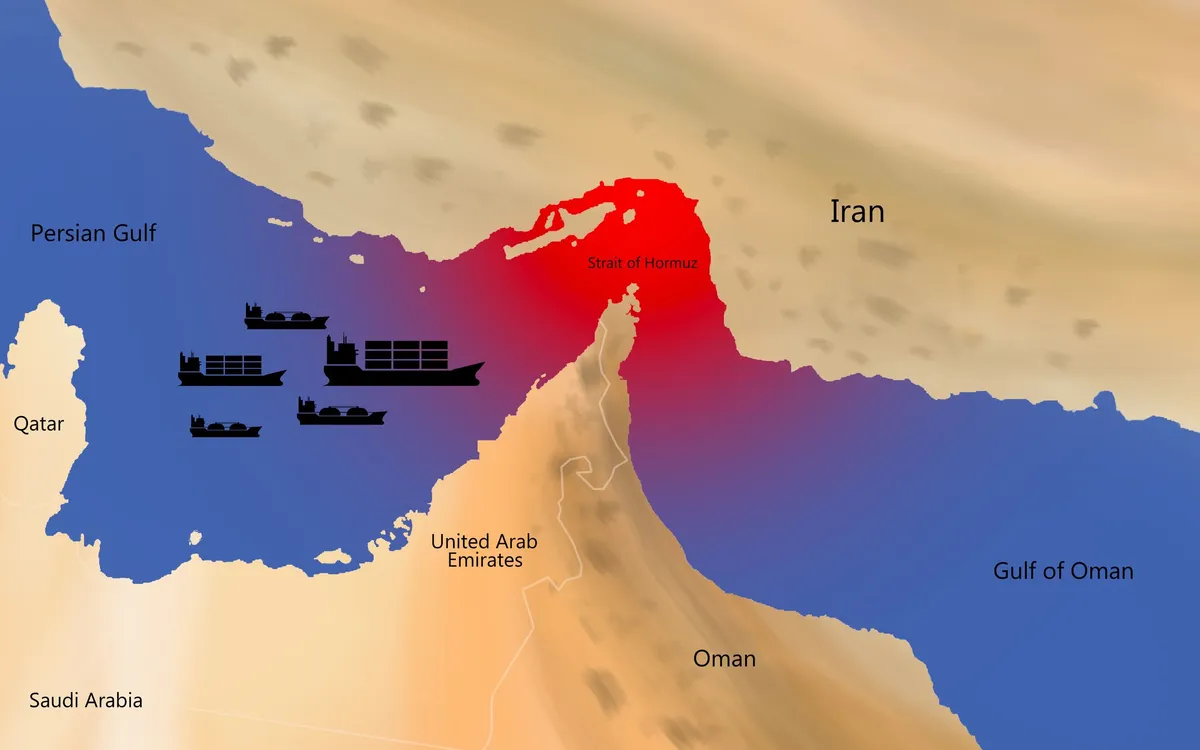
The Hormuz blockade (confirmed active in March 15-17 signals) converts Taiwan semiconductor supply into a direct constraint on US defense industrial capacity. If TSMC offline cascades to RTX, LMT, and NOG node access, those primes must either source alternative chips (years-long redesign) or halt production on F-35, NGAD, and hypersonic programs.
This forces a direct trade-off: continuing strikes on Iranian energy infrastructure (which sustains the blockade) versus securing the energy supply that keeps Taiwan's fabs running and US weapons production viable. The conflict is no longer contained to the Middle East — it now determines whether the US can manufacture advanced defense systems.
This is the first explicit quantification of the Taiwan semiconductor risk cascade from the active Hormuz conflict.
If the blockade persists beyond 30 days, TSMC's production capacity — which manufactures 54% of global advanced chips and is the sole source for most 3nm and 5nm nodes — faces forced shutdown.
This creates immediate pressure on US defense primes (RTX, LMT, NOG) whose FY26-27 programs depend on TSMC nodes for next-gen avionics and targeting systems, and forces the US to choose between continuing Middle East operations or securing Taiwan energy supply. The article does not specify Taiwan's helium reserve duration or LNG storage capacity, which determines the actual timeline.
The article asserts Taiwan 'requires large amounts of LNG' and imports 'almost all' energy but provides no figures for reserve duration, daily consumption, or current inventory levels. Without these specifics, the claimed '30-60 day' risk window cannot be verified.
Fault Lines
Strategic intelligence, synthesized daily — with a public track record. Every call graded against what actually happened.